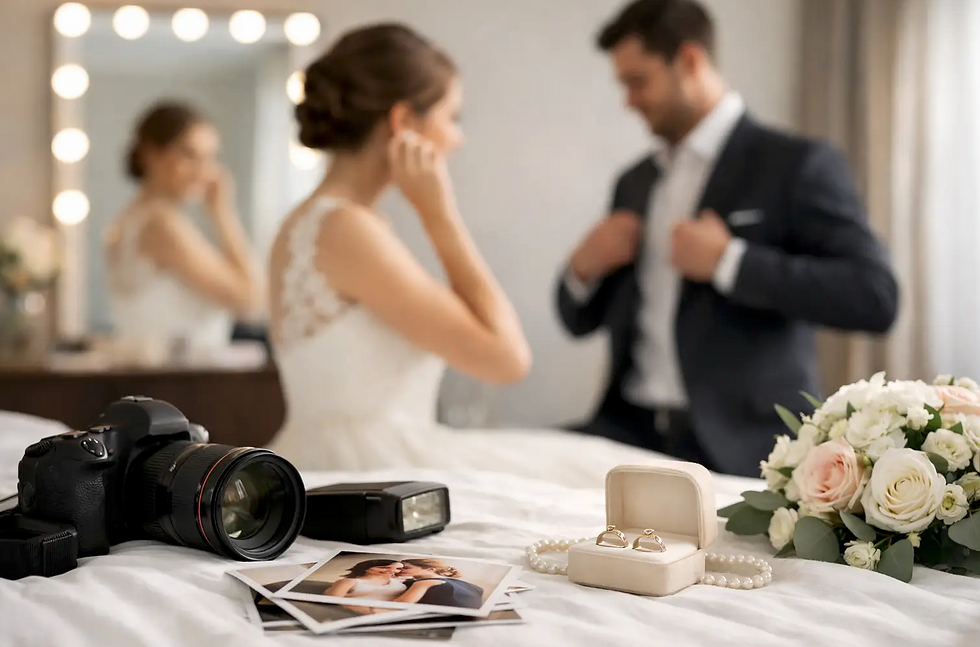
A great wedding gallery rarely comes from following a giant checklist alone. The best wedding photo shot list protects your essential portraits and details while leaving room for genuine, unscripted moments. The best wedding photo shot list gives your photographer structure, but it should also leave room for the moments nobody can script - the breath before the ceremony, the look on a parent’s face during a toast, the way the two of you laugh when the timeline shifts and the day keeps moving anyway.
That balance matters. Couples often start with a long list they found online, then realize it reads more like a catalog than a wedding day. What you actually need is a shot list that protects the essentials, reflects your priorities, and works with the pace of a real celebration.
What the Best Wedding Photo Shot List Really Does
At its best, a shot list is not a command sheet for your photographer. It is a planning tool. It helps everyone understand which people, details, and moments carry the most weight so they are not missed when the day gets busy.
This is especially helpful for family portraits and meaningful details. Your photographer will already know to document the first kiss, the rings, and the reception room before guests enter. Where couples add the most value is by identifying the relationships and personal touches an outside observer would not automatically know. That might be a grandmother who raised you, a custom embroidery inside the dress, or a college friend group that feels like family.
The trade-off is simple. If your list becomes too long, it can start to control the day instead of support it. More posed requests mean less time for candid coverage, and those candid moments are often the images couples treasure most years later.
Start with priorities, not pages
Before writing your wedding photo shot list, organize your priorities into three categories: must-have people, must-have moments, and must-have details. That keeps the list focused.
For most couples, the people category matters most. If there are divorced parents, blended families, elderly relatives, or anyone with limited mobility, those notes should be clear in advance. The smoother the family portrait portion runs, the more time you have for portraits that feel relaxed instead of rushed.
Moments come next. Some are universal, like getting ready, the ceremony, first dances, and speeches. Others depend on your plans. If you are doing a first look, private vows, a tea ceremony, or a sparkler exit, those should be built into the photo plan rather than treated as extras.
Details are the finishing layer. Invitations, heirloom jewelry, dress and suit elements, florals, signage, table settings, and venue wide shots all help tell the full story. These are often the images that tie an album together and give context to the emotional moments.
Best Wedding Photo Shot List by Each Part of the Day
Getting ready
The first part of the day sets the visual tone of the gallery. Good preparation photos are not just about the dress hanging in a window. They capture anticipation.
Your photographer will usually look for the outfit details, jewelry, shoes, rings, invitation suite, bouquet, hair and makeup finishing touches, and candid interactions with your wedding party or family. If there is a sentimental exchange - a note, a gift, a quiet moment with a parent - make sure that is on the radar.
It also helps to keep the room as clean and well lit as possible. Natural light makes a difference, especially during prep coverage. In estate venues, hotels, and waterfront bridal suites common across New Jersey weddings, one tidy corner near a window can dramatically improve these images.
First look and couple portraits
If you are planning a first look, include both the approach and the reaction. Those few seconds go quickly, and they often become some of the most emotional images of the day.
For couple portraits, think less about poses and more about atmosphere. Let your photographer know if you love classic portraits, editorial framing, or a more candid style with movement. The strongest portrait sets usually include a mix: a few timeless camera-facing images, a few wide scenic frames, and a lot of natural interaction.
If you are not doing a first look, that is completely fine. It just means portrait time may need to happen after the ceremony, which can tighten the timeline. This is where experience matters - a team that knows how to move efficiently can still create beautiful coverage without making you feel pulled away from your guests for too long.
Wedding party and family formals
This is where a written list matters most. Formal groupings are the one part of the day that benefits from precision.
Keep it practical. Start with immediate family, then add extended family only if it is truly important to you. Include names, not just titles, especially if family dynamics are complex. A good list might note combinations like bride with mom and dad, groom with siblings, couple with both sets of parents, couple with grandparents, and full wedding party.
If there are divorced parents or sensitive relationships, share that in advance. Your photographer is there to make the process smooth and respectful, but they can only plan well if they know the situation ahead of time.
Ceremony
Ceremony coverage should focus on both the key events and the emotional reaction shots around them. The processional, vows, ring exchange, first kiss, and recessional are obvious anchors, but the surrounding expressions often carry just as much meaning.
A parent wiping away tears, guests laughing during the officiant’s remarks, your hands shaking slightly before the vows - these are the moments that make the gallery feel lived in rather than staged. If your ceremony space has restrictions around movement or flash, your photographer should know that beforehand so expectations stay realistic.
Reception
Reception photos should begin before guests enter. Empty-room images preserve all the planning that went into the space, from centerpieces to candles to the overall lighting design.
From there, the usual must-haves include the grand entrance, first dance, parent dances, toasts, cake cutting, and open dancing. If your crowd loves the dance floor, make sure your coverage allows enough time for that energy to build. Some of the most joyful images happen later in the evening, not in the first ten minutes of the reception.
If you are planning any cultural traditions or custom entertainment, add those to the list with approximate timing. That gives your team a chance to be ready rather than react at the last second.
What not to put on your shot list
A shot list should not try to teach professionals how to do their job. Long Pinterest-style inventories with highly specific poses can become limiting, especially if the light, weather, or timeline changes.
It is better to share preferences than prescriptions. Say you love candid reactions, dramatic sunset portraits, or clean family formals. That tells your photographer what matters to you without forcing the day into a rigid formula.
It is also wise to avoid listing every single decor item unless details are your top priority. There is only so much time in a wedding day, and every extra request has to come from somewhere.
How to make the list work on the day
The best shot list is short enough to use and detailed enough to help. For most weddings, that means one clear document focused on family combinations, special details, and unique events.
Assign a family member, planner, or wedding party member who knows the key people to help gather them for portraits. This saves time and keeps you from having to direct traffic in formalwear.
You should also build in margin. A wedding day is not a studio session. Hair and makeup can run late. Transportation can take longer than expected. Light can change. A realistic timeline gives your photographer room to create strong images without rushing every segment.
For couples booking both photo and video, coordination matters even more. When the teams work together, portraits move faster and the coverage feels more cohesive. At Blue Moon Video Productions, we see the strongest photo and video results when the timeline protects authentic moments instead of overwhelming the day with back-to-back posed requests.
A sample approach that stays useful
If you want a simple framework, think of your list in one page. Include your top family groupings, any sentimental details, any unusual traditions, and your three non-negotiable moments. That is usually enough.
The goal is not to document every possible angle of a wedding. It is to preserve how your wedding felt. A thoughtful shot list helps your photographer cover the essentials, but the images you return to most often are usually the ones that happened in between. Leave room for those too.