top of page
Drone capturing aerial wedding footage at New Jersey wedding venue

Some wedding moments are best captured up close - the breath before the vows, a parent’s expression during a speech, the quick glance you share just before the doors open. Others are meant to be seen from above. Aerial footage can show the full setting of your day in a way no ground camera can, especially at a scenic New Jersey venue where the landscape is part of the experience.


That is why so many couples ask about drone wedding videography NJ services while planning their coverage. The short answer is yes, drone footage can add something beautiful to a wedding film. The better answer is that it depends on the venue, the timeline, the weather, and how the footage is used within the larger story of the day.

What drone wedding videography NJ couples should expect


Drone footage is not there to replace traditional wedding videography. It works best as a complement to it. A well-crafted wedding film still depends on the emotional core of the day - your vows, your voices, your reactions, your family, and the events that unfold naturally from morning preparations through the reception.


What a drone does particularly well is establish place and scale. It can reveal a waterfront venue at sunset, the symmetry of an estate property, the long driveway leading to a ceremony site, or the way a ballroom sits within the surrounding landscape. That visual context can make the opening of a wedding film feel cinematic and polished without distracting from the real purpose of the video, which is preserving the experience of the day.


For couples getting married in New Jersey, this can be especially meaningful. The state offers a wide variety of wedding settings, from country clubs and private estates to churches, gardens, and shoreline venues. Some locations have dramatic outdoor features that translate beautifully from the air. Others are better suited to traditional ground coverage, where intimate storytelling matters more than a sweeping overhead shot.

When aerial footage adds the most value


Drone coverage tends to make the biggest impact when the venue itself is part of what you fell in love with. If you chose a property for its waterfront view, grand architecture, rolling grounds, or secluded setting, aerial video can help preserve that part of the memory.

It also works well when there is room in the timeline to capture it properly. A drone shot is not something a videographer should force into a rushed schedule. It may be filmed earlier in the day to establish the venue, during cocktail hour when the property is active but not crowded, or near sunset when the light is softer and more flattering. The best results come from thoughtful planning, not from trying to squeeze in aerial coverage between major events.

There is also an editorial side to this. Drone footage usually appears in short, carefully selected moments within the final film. It may open the highlight video, transition between parts of the day, or give a sense of arrival before the ceremony begins. Used this way, it feels elegant and purposeful. Used too often, it can start to feel repetitive or disconnected from the real emotion of the wedding.

When drone footage may not be the right fit


This is where experience matters. Not every wedding needs aerial coverage, and a good videographer should be honest about that.


If your venue has restricted airspace, heavy tree coverage, limited open space, or rules against drone flights, aerial filming may not be possible. Weather is another major factor. Strong wind, rain, and low visibility can affect both safety and image quality. Even on a beautiful day, the timeline may simply not allow for the extra setup and coordination needed to capture meaningful aerial footage.


There are also weddings where the emotional story lives almost entirely in the people and the indoor moments. A traditional church ceremony followed by an elegant ballroom reception may benefit more from strong documentary coverage, clean audio, and thoughtful editing than from a few overhead shots. In those cases, couples are often better served by investing in fuller day coverage, additional cameras, or photography and video coordination rather than prioritizing a drone.

How drone footage fits into a cinematic wedding film


The most effective wedding films do not rely on one visual element. They build emotion through pacing, sound, story, and contrast. A drone can give a film scale, but the heart of the story still comes from the ground level.


Think about how your wedding film will feel years from now. You will want to hear your vows clearly. You will want to see the expression on a parent’s face during the first dance. You will want to relive the speeches, the movement of the ceremony, and the atmosphere of the reception. Aerial shots can frame those memories beautifully, but they are not the memories themselves.


That is why couples should think of drone videography as an enhancement, not the centerpiece. When paired with full-day coverage and strong storytelling, it can elevate the film. When treated as the main attraction, it often falls flat.


Venue style matters more than couples often realize


Aerial video looks very different depending on where you are getting married. At a large estate venue, a drone may show the full property, formal gardens, and architectural details that are hard to appreciate from the ground. At a waterfront location, it can capture the shoreline, dock, or sunset over the water in a way that adds atmosphere to the final edit.


At an urban venue or a church in a more restricted area, the opportunities may be more limited. That does not mean your film will be less cinematic. It simply means the focus shifts to composition, lighting, audio, and emotion captured through traditional cameras.


This is one reason local wedding experience is valuable. A team that regularly films in New Jersey understands how different venues function, when outdoor coverage is practical, and where drone footage tends to be most effective. That familiarity can save couples from expecting something that may not fit the location or the logistics of the day.

The practical side couples should keep in mind


Drone coverage requires more than just bringing an extra piece of equipment. It involves safe operation, timing, location awareness, and judgment.


The videographer needs to know when flying adds value and when it would interrupt the flow of the day or create unnecessary stress.


For couples, the practical takeaway is simple. If aerial footage matters to you, mention it early in the planning process. Your videographer can look at the venue, review the timeline, and explain whether it makes sense to include it. If it does, it should feel integrated into the overall coverage plan rather than treated like a separate novelty.


At Blue Moon Video Productions, that planning mindset is part of what helps wedding coverage feel polished and dependable. The strongest films come from understanding the full shape of the day, then choosing the tools that support the story best.

So, is it worth it?


For many couples, yes - especially when the venue has a strong visual setting and the footage is woven naturally into a cinematic edit. For others, the better investment may be in longer coverage, stronger audio capture, or a more complete record of the ceremony and reception.


The right choice comes down to what you want your wedding film to preserve. If seeing the full setting of your day matters to you, drone footage can be a beautiful addition. If your priorities are the vows, speeches, and emotional moments between the people you love most, those should always come first.


A thoughtful wedding film does not need every possible feature. It needs the right coverage, handled with experience, so that when you press play years from now, the day still feels real.

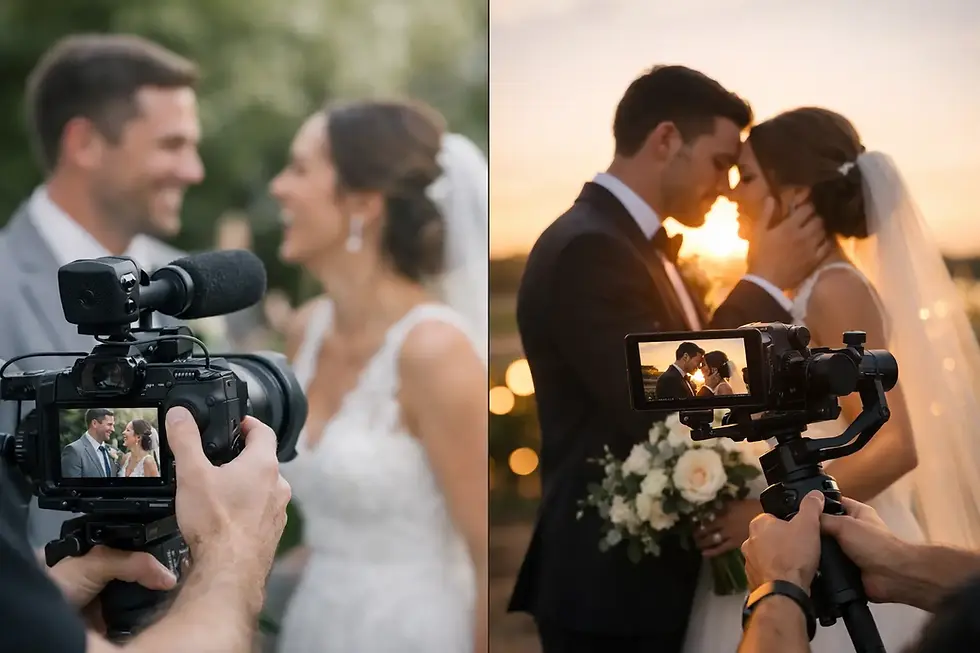
Wedding videographer filming bride and groom during ceremony at New Jersey wedding

When to Book a Wedding Videographer for Your Wedding Day


If your wedding date is set and your venue contract is signed, it’s already time to book your wedding videographer.

That surprises a lot of couples. Videography is often treated like a later decision, something to revisit after the dress, flowers, and music are handled. But in practice, the most experienced wedding filmmakers are usually booked well in advance, especially for peak dates in New Jersey, New York, and Pennsylvania. If preserving your vows, speeches, reactions, and all the moments you will miss in real time matters to you, videography should move up your list.

When to book wedding videographer services

For most couples, the best time to book a wedding videographer is 9 to 18 months before the wedding.

That range gives you the strongest chance of securing a company whose work you genuinely love, not just someone who still has the date available. It also gives you time to talk through coverage, filming style, timeline needs, and whether you want a highlight film, a long-form wedding movie, or both.

If you are getting married during peak wedding season, especially on a spring or fall Saturday, it is smart to book even earlier. Popular dates can fill quickly once venues start confirming calendars. Estate venues, country clubs, church weddings, and waterfront locations often create demand for full-service photo and video teams long before the wedding day arrives.

If your date is off-season or on a Friday, Sunday, or weekday, you may have a little more flexibility. Even then, waiting too long can narrow your options more than couples expect.

Why videographers book up earlier than many couples realize

A wedding videography company is not just reserving a camera for your day. They are reserving a production schedule.

Full-day coverage usually means your date is blocked for planning, travel, filming, audio setup, coordination with photographers and planners, and then many hours of editing afterward. Studios that focus on cinematic storytelling also take on a limited number of weddings so they can maintain quality and consistency.

That matters because wedding films are built from real moments that cannot be repeated. The exchange of vows, a father's toast, the way your partner reacts when they first see you - these are one-time events. Experienced videographers know how to capture them cleanly, beautifully, and without interrupting the flow of the day. Couples who prioritize that level of coverage tend to book early.

The ideal booking timeline by wedding planning stage

12 to 18 months out

This is the sweet spot for many couples. Once your venue and date are secured, you can start researching filmmakers whose style matches the way you want your wedding remembered.

At this stage, you usually have the most options. You can compare portfolios carefully, ask thoughtful questions, and choose based on experience and storytelling instead of availability alone. If you are planning a high-demand date or a wedding at a well-known New Jersey venue, this early timeline is especially helpful.

9 to 12 months out

This is still a very solid time to book. Many excellent videographers may still be available, but calendars will likely be tighter.

You may need to move a little faster once you find a company you connect with. If you have already decided that wedding video is a priority, this is the point where delaying usually creates more stress than benefit.

6 to 9 months out

Booking is still possible, but options may become limited for prime dates. You might find that certain studios are already committed, or that package availability is narrower than it was earlier in the process.

This does not mean you have missed your chance. It simply means your search should become more focused. Look for clear experience, complete wedding-day coverage, strong audio quality, and films that feel emotionally honest.

Less than 6 months out

At this stage, availability can vary widely. Some couples get lucky. Others find that the filmmakers they hoped to hire are fully booked.

If you are within six months of your wedding, reach out anyway. Date changes, weekday openings, and smaller production gaps do happen. But be prepared to make a decision quickly if you find the right fit.

What affects how early you should book

There is no single answer for every wedding. The right timeline depends on a few practical factors.

Season is a major one. In the Northeast, spring and fall weddings tend to be in especially high demand. If your wedding falls during a busy season, early booking gives you the best chance of securing a seasoned team.

Your venue also matters. Well-known venues often attract couples who book top-tier vendors early, especially when the setting calls for cinematic coverage. A formal ballroom, church ceremony, estate property, or waterfront location can all increase competition for experienced video teams.

Your priorities matter just as much. If you are flexible and simply want basic coverage, you may be comfortable booking later. If you care deeply about polished editing, professional audio, full-day storytelling, and a film that feels true to the day, it makes sense to treat videography as an early booking priority.

Why couples sometimes wait - and regret it

One of the most common planning mistakes is assuming photos will be enough.

Photography captures beautiful still moments. Video preserves movement, voices, timing, and sound. It lets you hear your ceremony as it happened, watch your first dance unfold, and revisit the energy of the room during speeches and celebrations. Years later, that difference becomes very clear.

Another reason couples wait is budget timing. That is understandable. Weddings involve many moving parts, and some decisions feel more immediate. But when couples come back to videography later, they often find their favorite options are no longer available.

After filming weddings for more than 17 years, Blue Moon Video Productions has seen how often couples are grateful they made room for video early. The emotional value tends to grow with time, especially once the day has passed in what feels like a blur.

How to know you are ready to book

You do not need every wedding detail finalized before reserving your videographer.

In most cases, you are ready to book once you have your date, venue, and a clear sense that video matters to you. You should also feel confident in the company's style, professionalism, and communication. A good fit is not only about beautiful footage. It is about trusting the team to work calmly, collaborate well with your other vendors, and capture real moments without making the day feel staged.

As you compare options, pay attention to full wedding films, not just short highlight reels. Highlights are valuable, but full edits tell you more about how a company handles ceremonies, speeches, pacing, and audio. That broader view can make your decision much easier.

Questions worth asking before you sign

A strong booking decision comes from clarity. Ask what is included in coverage, how many filmmakers will be there, how audio is recorded, what the editing process looks like, and how long delivery typically takes.

It also helps to ask how the team works with photographers and planners, whether they have experience at venues similar to yours, and what they recommend for your timeline if you want the best possible footage. These conversations are often where couples begin to understand the difference between basic documentation and thoughtful cinematic storytelling.

If you are booking both photo and video

Many couples prefer to book photography and videography around the same time, and often from the same studio. That can simplify communication and create a smoother wedding-day experience.

When one team handles both, there is usually stronger coordination around timing, lighting, family moments, and major events. No one is competing for position. No one is guessing what the other team needs. The result is often a more relaxed day and more complete coverage.

If that approach appeals to you, it is another reason not to wait too long. Combined photo and video teams with strong reputations can book quickly.

The short answer couples actually need

If you are wondering when to book wedding videographer services, the best answer is this: soon after you book your venue, and ideally at least 9 to 12 months before the wedding.

Earlier is better for peak dates. Later can still work, but your choices may be narrower.

The right videographer does more than record events. They preserve the sound, pace, emotion, and atmosphere of a day you will never live the same way twice. Once you know that matters to you, there is real value in securing the right team before your calendar - and everyone else's - fills up.

A good wedding film lets you return to the day as it felt, not just as it looked. That is worth planning for early.


Many couples searching for a New Jersey wedding videographer begin their search shortly after booking their venue, especially for popular spring and fall wedding dates.

wedding-videographer-nj-consultation


What to Look for in a Wedding Videographer NJ Couples Can Trust


You will remember how your wedding looked in photos. You will remember how it felt through video.

That distinction matters more than most couples realize when they first start planning. The movement in your dress, the sound of your vows, the way your parents react during the ceremony, the laughter during speeches, the energy on the dance floor - those moments live differently on film. If you are searching for a wedding videographer NJ couples can trust, the goal is not just finding someone with a camera. It is finding a professional who can preserve the emotion, pace, and real atmosphere of your day.

In New Jersey, weddings happen in every kind of setting, from elegant estate venues and classic church ceremonies to waterfront celebrations and country clubs. Each location brings its own lighting, sound challenges, timing, and flow. That is why experience matters. A skilled wedding filmmaker is not just documenting events as they happen. They are anticipating moments before they unfold and capturing them in a way that feels natural, polished, and true to you.

What a wedding videographer in NJ should really capture

A great wedding film is not built around staged clips alone. It is built around story.

That story starts long before the ceremony. The quiet moments while you are getting ready, the reading of a note, the final touches before walking down the aisle - these scenes create context and emotion. Then the day shifts into the ceremony itself, where audio becomes just as important as visuals. If your vows are hard to hear or your officiant is muffled, the emotional impact is lost. Professional wedding videography should give equal attention to sound, because hearing your voices years later is part of what makes the film meaningful.

The same is true during the reception. Toasts, first dances, parent dances, and spontaneous reactions often become some of the most cherished moments in a final wedding film. Couples sometimes focus heavily on the highlight reel, but long-form coverage has real value too. A short cinematic film is wonderful for reliving the emotional arc of the day. A longer edited wedding movie lets you revisit the full experience, including the moments you may have missed in real time.

That balance between artistry and documentation is often what separates an experienced studio from a less seasoned one.

Why local experience matters when hiring a wedding videographer NJ couples can rely on


Many couples searching for a wedding videographer NJ professionals recommend are looking for more than beautiful footage — they want a film that captures the real emotion and energy of their wedding day.


New Jersey is a diverse wedding market. A ballroom in North Jersey calls for a different filming approach than a beachside venue on the Shore or a historic estate in Central Jersey. Lighting changes quickly, timelines run differently from one venue to another, and some ceremony spaces are more restrictive than others.

An experienced local videographer understands these variables. They know how to work in low-light reception rooms without making the footage look harsh. They know how to handle church ceremonies respectfully and efficiently. They know how to film outdoors on windy waterfronts where audio can become a challenge. They also understand the pace of weddings in this region, where many days include full Catholic ceremonies, large family groupings, and packed reception schedules.

This kind of familiarity creates a calmer experience for couples. You want a videography team that does not need to figure things out on the fly. You want professionals who can adapt quickly, communicate clearly with planners and photographers, and keep coverage moving without adding stress.

What to look for in a wedding film portfolio

When couples compare videographers, it is easy to focus only on the most dramatic shots. Beautiful drone footage, slow-motion clips, and romantic music can make any highlight film feel impressive at first glance. But a strong portfolio should show more than style.

Look closely at consistency. Does the work feel polished across different venues and lighting situations? Can you hear vows and speeches clearly? Do the films feel personal, or do they all look exactly the same? The best wedding filmmakers have a recognizable quality level without making every couple's story feel interchangeable.

It also helps to ask what is included beyond the highlight film. Some studios deliver only a short trailer-style video. Others offer full ceremony edits, complete speech coverage, and documentary-style films alongside cinematic highlights. Neither option is automatically right or wrong. It depends on what matters most to you. If you know you will want to hear every word of your ceremony and every toast in full, make sure that is part of the package you are considering.

Questions worth asking before you book

The right questions can tell you a lot about how a videographer works.

Ask how many hours of coverage are included and whether full-day coverage is available. Many couples underestimate how quickly a wedding day moves. If coverage starts too late or ends too early, important parts of the story can be missed.

Ask about audio recording. This is one of the clearest signs of professionalism. Strong wedding films depend on clean sound from vows, officiants, and speeches, not just music layered over visuals.

Ask who will actually be filming your wedding. Some companies have a large team, while others are smaller and more personalized. You should know whether the portfolio you love reflects the team who will be with you on the day.

Ask how the videographer works alongside the photographer. This relationship matters more than couples often expect. The best photo and video teams coordinate naturally so neither coverage gets in the way of the other.

Finally, ask about delivery. Find out what formats are included, how long editing typically takes, and what final films you can expect to receive.

The value of full-day wedding coverage

One of the biggest decisions couples make is whether they want a few hours of coverage or the full day documented.

Shorter coverage can work for very small weddings or simple timelines. But for most traditional weddings, full-day coverage gives the film its emotional depth. It connects the anticipation of the morning with the ceremony, the celebration, and the final energy of the night.

Without that full arc, the story can feel incomplete. A film becomes more powerful when it shows how the day unfolded rather than only the most obvious milestones. The quiet moments often give the major moments their meaning.

That is one reason many couples later say video became one of the most valuable investments they made. You cannot recreate the way your voices sounded, the pace of the ceremony, or the expressions during speeches. Once the day passes, film is what brings it back.

Style matters, but trust matters more

Every couple wants a wedding film that looks beautiful. That part is expected. The more important question is whether you trust the team creating it.

Your videographer will be with you during intimate, emotional, and fast-moving moments. They need to know when to step in for guidance and when to stay unobtrusive. They should help you feel comfortable on camera without making the day feel like a production set.

That balance takes experience. A calm, organized presence affects the final result more than couples sometimes realize. When you feel at ease, the footage feels more natural. Reactions are genuine. Moments breathe. The film reflects your wedding as it truly felt, not as something forced for the camera.

For couples planning in New Jersey, working with a studio that understands both cinematic storytelling and the practical flow of real wedding days can make all the difference. Blue Moon Video Productions has spent more than 17 years filming weddings across New Jersey, New York, and Pennsylvania, with a focus on authentic moments, strong audio, and films that preserve the full emotional experience of the day.

Choosing the right fit for your wedding day

There is no single perfect approach for every couple. Some want an elegant cinematic highlight. Others want full documentary coverage with every important chapter preserved. Most want both.

The best choice usually comes down to three things: quality, experience, and connection. You should love the work, feel confident in the team, and understand exactly what will be captured. If those pieces are in place, you are far more likely to end up with a film that still feels meaningful years from now.

As you compare options, try to think beyond the wedding day itself. Picture the first time you watch your film after the celebration is over. Picture watching it again on an anniversary, or sharing it with family in the future. The right videographer is not just filming an event. They are preserving a memory in motion, with all the voices, reactions, and emotion that still deserve to be felt long after the day is over.

If you're currently planning a wedding in New Jersey and researching videography options, it helps to start by seeing how different filmmakers approach storytelling and coverage. Viewing complete wedding films can give you a clearer sense of how a studio captures real moments throughout the day. You can explore recent films and learn more about coverage options at Blue Moon Video Productions

bottom of page