top of page
how to choose videographer style for weddings showing cinematic and documentary wedding film styles

How to Choose Videographer Style for Weddings Based on Your Priorities


When couples search how to choose videographer style for weddings, they are usually trying to understand which approach will best reflect their personalities and the feeling of their day.


A lot of couples start by asking about price, packages, and hours of coverage. Then they watch a few sample films and realize the bigger question is how to choose videographer style for a wedding that feels like them. Two studios can film the same day at the same venue and create completely different memories.


That is why style matters so much. Your wedding film is not just a record of events. It is the way those moments are shaped, paced, and remembered. The right style should reflect your personalities, the energy of your day, and what you want to feel when you press play five or ten years from now.

How to choose videographer style without getting overwhelmed


Most couples are not comparing technical terms. They are reacting to feeling. One film feels quiet and emotional. Another feels polished and dramatic. Another feels natural and almost invisible, like the day is unfolding on its own.


The easiest way to narrow your choice is to stop asking which style is best and start asking which style feels honest for your wedding. A black-tie estate wedding often lends itself beautifully to a cinematic approach, but that does not mean every elegant wedding needs sweeping music and dramatic pacing. A relaxed waterfront celebration may feel better with a more documentary tone, but some couples still want that same day edited with a refined, film-like finish. Style is not only about the venue. It is about the couple, the atmosphere, and the story being told.


As you watch sample films, pay attention to your own reaction. Do you connect more with quiet candids or stylized shots? Do you want your vows and speeches to lead the story, or do you picture a shorter highlight film driven more by music and visuals? Those answers will tell you more than any label.

The main wedding videography styles couples see


Most wedding films fall somewhere between cinematic and documentary, with many studios blending the two.

Cinematic wedding videography


A cinematic style is polished, intentional, and emotionally shaped in post-production. It often includes thoughtful composition, movement, beautiful light, carefully chosen music, and editing that builds momentum. The goal is not simply to show what happened, but to create a film that feels immersive and emotionally complete.


This style is often a strong fit for couples who want their wedding to feel elevated on screen. It can be especially effective at estates, country clubs, churches, and waterfront venues where the setting adds visual depth. The trade-off is that cinematic storytelling relies heavily on the videographer's creative judgment. If you prefer a very literal record of the day, a purely cinematic edit may feel too stylized unless it also includes a longer documentary cut.

Documentary wedding videography


A documentary style focuses on real events as they happen with less emphasis on stylized direction. The pacing is often more natural, with longer stretches of live audio and an edit that preserves the sequence of the day. This style tends to highlight authenticity, reactions, and small in-between moments.


For couples who care deeply about hearing the full vows, complete speeches, and the natural sound of the day, documentary coverage can be incredibly meaningful. The trade-off is that it may feel less visually dramatic than a highly cinematic highlight film. That is not a weakness. It is simply a different priority.

Hybrid styles


Many experienced wedding filmmakers work in a hybrid style because most couples want both emotional storytelling and a faithful record. A short highlight film might feel cinematic, while a longer wedding movie preserves the ceremony, speeches, and other key moments with more completeness.


This middle ground is often where couples find the most value. You get the emotion and artistry of a beautifully edited film, along with the comfort of knowing the important words and interactions were not reduced to a few clips.

How to choose videographer style based on your priorities


If you are unsure which direction fits, think less about labels and more about what you never want to miss.


If your vows are deeply personal, live audio should be a major priority. If your families are traveling in and you know the reception will be full of speeches and spontaneous moments, you may care most about complete coverage and storytelling continuity. If you have always imagined a wedding film that feels elegant, dramatic, and visually rich, you may lean toward a cinematic editor who shapes the footage with a strong artistic point of view.


It also helps to think about your own comfort level in front of the camera. Some videographers create a more directed experience, especially during portraits or staged detail shots. Others take a quieter, less intrusive approach. Neither is wrong. But if you are camera-shy, a style built around natural observation may feel more comfortable. If you enjoy editorial portraits and polished visuals, you may appreciate more guidance.

What to look for in real sample films


Highlight reels are helpful, but they can also be misleading if you only watch the most dramatic 60 seconds on social media. To understand a videographer's true style, ask to see full wedding films or at least several complete highlights from real weddings.


Look at how they handle the ceremony. Can you hear the vows clearly? Do the emotions build naturally, or does everything feel dependent on music? Notice the speeches. Are reactions from parents, friends, and guests woven into the story, or are those moments barely included?


Also pay attention to consistency. A strong wedding videographer should be able to create beautiful work in different lighting situations, from a bright church to a dim reception ballroom. If every portfolio piece looks amazing only in ideal outdoor light, that may not tell you enough about how your own wedding will be covered.

Style is also about editing, not just filming


Couples often think videographer style comes down to camera angles or equipment. In reality, the editing process shapes the final experience just as much.

A film can be shot beautifully and still feel flat if the pacing is off. On the other hand, a thoughtful editor can turn simple moments into something deeply moving by knowing when to linger, when to cut, and how to let audio carry emotion. This is especially important for weddings because so much of the meaning lives in spoken words, expressions, and timing.


When reviewing films, ask yourself whether the edit lets you feel the day or simply watch it. The best wedding films do more than show a timeline. They recreate an atmosphere.

Questions that help you choose with confidence


Once you have a sense of the styles you like, your next step is a conversation. Ask how the videographer approaches the day. Do they direct a lot, or do they prefer to stay in the background? How do they balance cinematic shots with real-time moments? Will your vows and speeches be included in full, or mainly used as short audio clips in a highlight?


You can also ask what they deliver beyond the main film. For many couples, a highlight film is only part of the value. A longer-form wedding movie often becomes the piece they return to for anniversaries and family viewing because it preserves more of the real experience.


An experienced studio should be able to explain its approach clearly and help you understand what fits your priorities. That conversation matters because style is not only what you see in the final film. It affects how your wedding day feels while it is being captured.

The best choice is the one that feels true to your day


There is no single correct answer to how to choose videographer style. A beautiful wedding film is not defined by trends, flashy transitions, or the most dramatic drone shot. It is defined by whether it still feels like your wedding when you watch it years later.


For some couples, that means a cinematic film with sweeping visuals and carefully crafted storytelling. For others, it means hearing every word of the ceremony and seeing the day unfold naturally from start to finish. Often, the right fit is a thoughtful blend of both.


If a studio's work feels emotionally honest, visually consistent, and aligned with what matters most to you, pay attention to that instinct. The style you choose should not just look impressive. It should bring you back to the people, voices, and moments you never want to lose.


Choosing the Right Wedding Videography Style


The style you choose shapes how your wedding will be remembered. Whether you prefer cinematic storytelling, documentary coverage, or a blend of both, the right fit should feel natural to your day.


If you're planning a wedding in New Jersey, you can explore real wedding films and see how different styles come together here:👉 https://www.bluemoonvideoproductions.com/wedding-films-nj

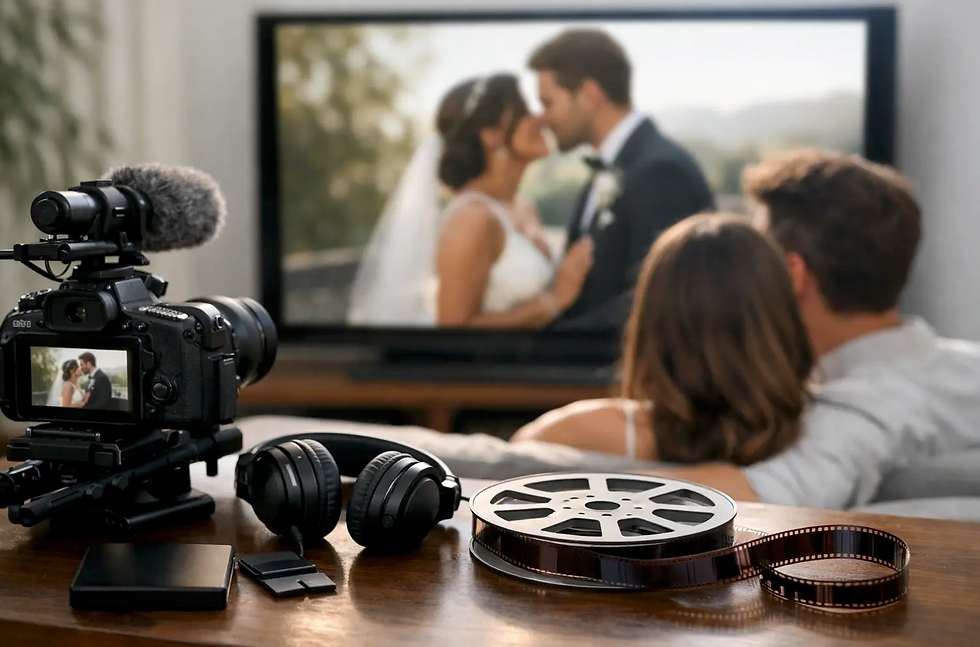
Wedding videographer capturing ceremony during well-planned wedding timeline

A beautiful wedding film doesn’t happen by accident. The most meaningful moments — a quiet exchange before the ceremony, your partner’s reaction walking down the aisle, the emotion in a parent’s speech — all depend on having enough time built into your day to capture them naturally.


If you’re figuring out how to plan your wedding videography timeline, the goal isn’t to turn your wedding into a production. It’s to create a schedule that allows your day to flow smoothly while giving your wedding videographer the time needed to capture everything without feeling rushed.

Why your wedding video timeline matters more than you think


Photography and videography In New Jersey often work side by side, but they require time in very different ways.


A photographer can capture a moment quickly and move on. A wedding videographer needs time to capture motion, audio, reactions, and transitions — all of which take longer to set up and execute properly.


When a timeline is too tight, the first thing that disappears is usually the in-between moments — the interactions, laughter, and natural reactions that give your wedding film emotional depth.


That’s why your wedding videography timeline isn’t just about when things happen — it’s about allowing those moments to unfold.

Why Your Wedding Videographer Should Help Build Your Timeline


One of the most common mistakes couples make is building their timeline around photography alone.


In reality, video requires more time than photography, and timelines that don’t account for that often run short by 30 minutes to an hour.


That’s why your wedding videographer should be involved early in the planning process.


When your video timeline is built correctly:


• Photography naturally fits into it

• The day feels less rushed

• More moments are captured fully


A strong timeline isn’t just about staying on schedule — it’s about protecting your experience and your final wedding film.

Why Preparation Time Matters for Video


Preparation is one of the most important parts of your wedding video, and it requires more time than most couples expect.


For video, 2 hours of preparation coverage is ideal.

This allows your wedding videographer to:


• Capture detail shots (dress, rings, invitations)

• Set up lighting and composition

• Film natural interactions with family and friends

• Capture getting-ready moments, letters, and emotions


Detail shots alone can take 30 minutes to an hour when done properly. The remaining time is what allows your video to feel natural and not rushed.


The same applies to groom preparation as well.

How to Plan Your Wedding Video Timeline the Right Way


The best way to plan a wedding videography timeline is to start with your ceremony and reception times, then work backwards.


These are the fixed points of your day. Everything else — preparation, portraits, and transitions — should be built around them.


From there, you can structure the earlier part of the day properly.


A well-balanced wedding videography timeline typically includes:


• 2 hours for bridal preparation

• 2 hours for portraits (photo and video together)

• 30 minutes for a first look, if you are doing one

• 30 minutes of buffer time before the ceremony

• 1 hour buffer time before the ceremony if it takes place at a church


That buffer before the ceremony is extremely important. It gives you time to breathe, touch up makeup, and mentally prepare without feeling rushed.


If your ceremony and reception are at different locations, travel time also needs to be factored in carefully. Even short distances can take longer on a wedding day than expected.


The biggest mistake couples make is trying to fit everything into a tight window. A timeline that looks fine on paper can quickly feel rushed in real life without enough room for setup, movement, and transitions.

First Look vs No First Look (Timeline Impact)


If you are doing a first look, you should plan for at least 30 minutes in your timeline.


This includes:


• Setup and positioning

• Capturing the moment naturally

• Additional creative shots afterward


A first look also allows you to complete most of your portraits before the ceremony, which makes the rest of the day feel more relaxed.


If you are not doing a first look, you should expect to use most — if not all — of your cocktail hour for portraits and video.


This is one of the biggest trade-offs couples need to consider when planning their timeline.

Why You Need Enough Time for Portraits


Portraits are not just for photography — they are also a major part of your wedding video.


You should plan for 2 hours of portrait time, especially if you want both photo and video coverage done properly.


During this time:


• Your photographer captures formal portraits • Your wedding videographer captures cinematic footage


This is where a lot of the “creative” part of your wedding film comes from.

Rushing this part of the day can significantly impact the quality of both your photos and your video.

Ceremony Timing and Preparation


Your ceremony is one of the most important parts of your wedding day, and it needs to be approached with enough time and preparation.


Your wedding videographer should arrive early enough to:


• Capture the ceremony space • Set up cameras and audio • Prepare for entrances and reactions


If your ceremony takes place in a church or formal venue, there may also be restrictions on movement or placement, which makes planning even more important.


This is not a part of the day you want to feel rushed.

Reception Timing and Coverage


Reception timelines often get overlooked, but they play a major role in your final wedding video.


Key moments like:


• Entrances

• First dances

• Parent dances

• Speeches


should be spaced properly so they don’t feel rushed or stacked too closely together.

If you want strong dance floor footage, your wedding videography coverage needs to extend long enough to capture real energy — not just the first few songs.

Work Backwards from What Matters Most


The best way to plan your wedding video timeline is to start with what matters most to you.


If your priority is:


• Emotional preparation moments → start earlier

• Ceremony and vows → build buffer before

• Reception and dancing → extend coverage later


Your timeline should reflect your priorities, not just a generic schedule.

The Best Wedding Video Timeline Feels Natural


A great timeline should never make your day feel forced or overly structured.


The goal is to create enough space so that:


• Moments happen naturally

• You don’t feel rushed

• Your videographer has time to capture everything properly


The best wedding films are built from real moments — not staged ones.

Common Wedding Videography Timeline Mistakes to Avoid


Even well-planned wedding days can run into timeline issues that affect your final film.


Some of the most common mistakes include:


• Not allowing enough time for preparation coverage

• Skipping buffer time before the ceremony

• Underestimating travel between locations

• Trying to fit too many events into a short window

• Ending videography coverage too early


Avoiding these mistakes helps ensure your wedding videography timeline allows your day to feel natural while still capturing every important moment.

Final Thoughts on Planning Your Wedding Video Timeline


When planning your wedding video timeline, the goal is not to fit everything in — it’s to give everything enough space.


Start with your ceremony and reception, work backwards, and make sure your timeline reflects how your day will actually unfold.


If done correctly, your timeline won’t just make your wedding day smoother — it will directly impact the quality of your final wedding film.


And years from now, when you watch your wedding video, that extra time and planning is what will allow you to relive the day exactly as it felt.


The most memorable wedding films are built from honest moments - the laugh that happens before the first look, the unexpected reaction during a toast, the way your voices sound during vows. Those moments cannot be forced, but they can be protected.


If you are planning your schedule now, involve your videographer earlier than you think you need to. An experienced team can help shape a timeline that feels calm, realistic, and cinematic without pulling you out of the experience. And when the day moves well, your film does too.


Years from now, you will not be thinking about whether the timeline looked perfect on paper. You will care that the moments felt real and that someone was there, with the time and perspective to preserve them well.


If you're planning your wedding and want help building a timeline that actually works, it's worth speaking with a team that understands how to capture the full day without rushing it.


At Blue Moon Video Productions, we help couples plan wedding videography timelines that feel natural, organized, and built around real moments — not just a schedule.


If you’d like to check availability or talk through your timeline, you can reach out here to get started.

Feature length wedding film capturing bride and groom during ceremony with emotional vows and full wedding day coverage

Is a Feature Length Wedding Film Worth It Compared to a Highlight Video?


A lot of couples first ask for a short highlight reel, then realize they also want the parts that actually made the day feel real. The full exchange of vows. The complete toasts. A parent’s voice during a speech. The quiet moments before the ceremony.


That is where a feature length wedding film becomes so meaningful. It is not just a recap of the day. It is the day, carefully shaped into a film you can return to for years.

What a feature length wedding film really includes


A feature length wedding film is a longer-form edit that preserves the story of your wedding with far more depth than a three-to-five-minute highlight video. While every studio structures it a little differently, the goal is usually the same: to document the full emotional experience, not just the most visually striking clips.


That often means including substantial portions of the day rather than brief excerpts. You may see the morning preparations unfold with natural audio, the ceremony covered in a complete and watchable way, and the speeches presented with room to breathe. Instead of hearing one line from a toast, you hear the full memory, joke, or thank you that mattered in the room.


For many couples, that difference only becomes obvious after the wedding. A highlight film is powerful and cinematic, but it is selective by design. A longer film gives those moments context. You understand how the day moved, how people responded, and what was actually said.

Why couples choose a feature length wedding film


The simplest answer is that they do not want to lose the parts of the wedding that cannot be recreated.


Flowers, food, and decor are all part of the experience, but spoken words carry a different kind of weight. Vows are one-time promises. Parent speeches often become more emotional with time. The laughter at a reception entrance or the tremble in someone’s voice during a reading may feel small in the moment, but years later, those details can mean everything.


A feature length wedding film also gives space to people. Not just the couple, but the family and friends who shaped the day. Grandparents, siblings, and lifelong friends are seen and heard in a fuller way. That matters more as time passes.


This is especially true for weddings with meaningful ceremony traditions, multiple speech segments, or a strong focus on family. At estate venues, churches, country clubs, and waterfront celebrations throughout New Jersey, we often see couples put tremendous thought into the flow of the day. A longer film respects that effort because it preserves more than the surface of the event.

Highlight film vs. feature length wedding film


A highlight film and a feature length wedding film serve different purposes. One is not automatically better than the other. It depends on how you want to remember your wedding.


A highlight film is designed to be concise, emotional, and visually driven. It is the film you are likely to share easily with friends and family. It captures the essence of the day in a polished, cinematic way.


A feature length wedding film is more immersive. It allows you to sit with the full story and revisit the day with greater detail. You are not just remembering how it looked. You are remembering how it sounded, how it unfolded, and how the people around you experienced it.


Many couples choose both for that reason. The short film gives them a beautifully edited overview they can watch often and share widely. The longer film becomes the keepsake they return to on anniversaries, with family, or at moments when they want to feel the day again in a deeper way.

What makes a long-form wedding film feel cinematic


Length alone does not make a wedding film valuable. A longer edit still needs structure, pacing, and thoughtful storytelling.


The best feature length wedding films do not feel like raw footage placed in sequence. They are professionally edited to keep the day coherent and emotionally engaging. That means clean audio, intentional scene transitions, balanced coverage of key events, and a rhythm that lets important moments play out without dragging.

This is where experience matters. A wedding filmmaker needs to know when to let a moment breathe and when to move the story forward. A complete ceremony is important, but it should still be presented clearly and beautifully. Full speeches matter, but they also need strong sound, strong camera coverage, and edits that maintain focus.


When long-form editing is done well, the film feels natural and polished. It holds your attention because it reflects the real flow of the day while still honoring cinematic storytelling.

When a feature length wedding film makes the most sense


Not every couple wants the same final product, and that is completely reasonable. If you prefer something brief and shareable, a highlight film may cover what matters most to you.


But a feature length wedding film is often the right choice when your wedding includes meaningful spoken moments, family traditions, or a timeline with several important chapters. If you are planning a church ceremony, a first look, extended portrait time, multiple toasts, special dances, or cultural traditions during the reception, a longer film gives those events room to exist in full.


It is also a strong fit for couples who know they are sentimental. Some people already understand that they will want to hear every word again. Others realize it after the wedding, when they notice how much of the day passed in a blur. The challenge is that you cannot go back and capture it later.


That is why many couples decide to preserve more from the start. It is easier to have the footage and not need every second of it than to wish those moments had been recorded more fully.

Questions to ask before booking


If you are considering a feature length wedding film, ask how the studio defines it. The term can vary. One company may mean a documentary-style edit with major events shown in near-full length. Another may create a more cinematic long-form film that blends complete moments with storytelling elements.


You should also ask what parts of the day are typically included. Find out whether full vows, complete speeches, first dances, and natural audio from preparation are part of the final edit. Audio quality is another major point. A long-form film depends heavily on clear sound, especially during ceremonies and toasts.


Finally, ask how the team approaches coverage on the wedding day. A feature length wedding film begins with filming, not editing. Strong camera placement, reliable audio capture, and full-day coverage make a major difference in the final result.


At Blue Moon Video Productions, this is where experience becomes practical, not just impressive on paper. After years of filming weddings, you learn how to anticipate moments before they happen and protect the pieces couples will care about most later.

The value years later


Right after the wedding, couples often focus on the excitement of seeing everything come together on screen. Years later, the reason they treasure the film usually changes.


They watch it to hear a loved one’s voice again. They notice reactions they missed the first time. They share it with children or relatives who were not there. The film becomes less about the event itself and more about the people, the promises, and the feeling of that particular season of life.


That is the real value of a feature length wedding film. It preserves not only the look of the day, but its pace, sound, and emotional texture. It gives you more than a beautiful summary. It gives you a way back.


If you are deciding between a short keepsake and a fuller record of your wedding day, think about what you will want to hear and see ten years from now. The answer is usually much more personal than practical, and that is exactly why it matters.

bottom of page