top of page
how cinematic wedding films differ showing emotional wedding film moment with couple

How Cinematic Wedding Films Differ in Storytelling and Emotion


When couples ask how cinematic wedding films differ, they are usually trying to understand what makes one wedding film feel emotional and immersive while another simply documents the day.


You can usually tell within the first minute. One wedding video simply records what happened. A cinematic film makes you feel like you are back in the room, hearing the tremble in the vows, seeing the quick look between the couple, and remembering the pace and emotion of the day. That is the heart of how cinematic wedding films differ. It is not just a style choice. It changes what the finished film feels like years later.


For many couples, the comparison starts with visuals. A cinematic film often looks more polished, more intentional, and more emotionally driven. But the real difference goes deeper than color, slow motion, or music. It comes down to storytelling, sound, pacing, and the ability to preserve not only the events of the day but the experience of living through them.

How Cinematic Wedding Films Differ From Standard Wedding Videos


A standard wedding video typically focuses on documentation. It captures the ceremony, key reception moments, and formal events in a straightforward way. That approach has value. If your main goal is simply to have a record of the day from beginning to end, traditional coverage can do that well.


A cinematic wedding film is shaped with a different goal. Instead of only showing what happened in order, it is edited to tell the emotional story of the wedding day. The film is built around meaningful moments like personal vows, speeches, reactions, anticipation before the ceremony, and the energy of the celebration. Those moments are carefully selected and woven together so the final piece feels cohesive and personal rather than purely chronological.


That does not mean cinematic coverage ignores the important events. It means those events are presented with more intention. The ceremony is not just shown. It is framed as part of a bigger story. The toasts are not just included. The strongest lines may guide the film from one part of the day to another, helping the story unfold naturally.

The Difference Is Storytelling, Not Just Style


One of the biggest misunderstandings is that cinematic means dramatic visuals only. In reality, storytelling is what separates a cinematic wedding film from a basic recording.


A strong wedding filmmaker looks for the details that make your day yours. That could be a letter read in the bridal suite, a father's expression before the ceremony, a quiet exchange during portraits, or the way your guests respond to the vows. These are not filler shots. They are part of the emotional structure of the film.


The editing process matters just as much as what is captured. In a cinematic film, scenes are chosen and arranged to create rhythm and meaning. You may hear audio from the vows over footage from getting ready, or a line from a speech may introduce a sequence from the reception. This approach gives the film emotional continuity. Instead of watching a series of clips, you are drawn into a complete memory.


That is why two films from the same venue can feel completely different. The setting matters, but the story comes from the people, the voices, and the moments that happen naturally throughout the day.

Audio Plays a Much Bigger Role Than Most Couples Expect


If you ask what makes a wedding film truly moving, audio is usually a big part of the answer. Clean, well-recorded sound changes everything.


In a cinematic wedding film, spoken words often carry the emotional weight. Personal vows, ceremony readings, speeches, and candid remarks become part of the storytelling. When those moments are recorded clearly and blended thoughtfully with music and natural sound, the film feels immediate and real.


This is one reason cinematic wedding filmmaking requires more than a good camera. It depends on professional audio techniques, careful mic placement, and experience adapting to unpredictable environments like churches, ballrooms, waterfront venues, and outdoor ceremonies.


Couples sometimes focus first on image quality because it is easier to compare online. But years from now, hearing your voices as they were that day can be just as meaningful as seeing the footage.

Pacing and Editing Shape the Experience


Another way cinematic wedding films differ is in pacing. A standard video may present events in full with minimal shaping. A cinematic film is edited to create momentum, emotion, and balance.


That often means the finished highlight film is shorter than the total footage captured, but more powerful because every scene earns its place. The goal is not to include everything equally. The goal is to include what tells the story best.


There is a trade-off here, and it is worth understanding. Some couples want a condensed film that feels like a beautifully crafted memory. Others also want a longer edit that preserves more of the full ceremony or reception events. Those preferences are not in conflict. In many cases, the best solution is to have both a cinematic highlight film and a longer-form wedding movie. One gives you the emotional arc. The other gives you the fuller record.


That balance is especially valuable for couples who want to relive the vows, full speeches, and major moments without losing the artistry of a more polished film.

Cinematic Coverage Starts Long Before the Editing Room


The final film is shaped in editing, but the cinematic approach starts the moment coverage begins. Filmmakers working in this style are not only documenting events. They are anticipating moments.


That includes how they move through the day, how they frame scenes, and how they capture transitions between big events. The quiet minutes before the ceremony, the atmosphere of the venue, the details that set the scene, and the reactions happening at the edges of the room all become part of the story.


Experience matters here. Weddings move quickly, and there are no second takes for the first look, the exchange of rings, or a parent wiping away tears during a speech. An experienced team knows when to stay unobtrusive and when to move decisively to capture a meaningful angle.


This is especially important at venues with different lighting and layouts. A church ceremony, an estate wedding, and a waterfront reception each come with different challenges. A cinematic result depends not only on creativity but on consistent decision-making under pressure.

How Cinematic Wedding Films Differ in What They Preserve


At a practical level, both traditional and cinematic wedding videos preserve the day. The question is what kind of memory you want to keep.


A traditional video preserves the sequence of events. A cinematic wedding film preserves atmosphere, emotion, and perspective. It helps you remember not just that your partner smiled during the vows, but how that moment felt. It reminds you of voices, movement, anticipation, and the way the whole day unfolded around you.


For many couples, that difference becomes more meaningful over time. Right after the wedding, you may remember every detail clearly. Years later, the emotional texture of the day matters even more. Watching a film that captures those details with care can bring you back in a way a simple recording often cannot.


That said, cinematic does not always mean better for every couple in every situation. If your priority is a straightforward archive with minimal editing, a more traditional format may fit your goals. If you want a film that feels personal, polished, and emotionally rich, cinematic storytelling is usually the better choice.

What Couples Should Ask Before Booking


If you are comparing videographers, it helps to look past labels. Many wedding videos are described as cinematic, but the term can mean different things depending on the studio.


Ask how the story is built. Find out whether vows and speeches are used as part of the edit, whether audio is professionally recorded, and whether you will receive both a highlight film and longer-form coverage if that matters to you. Look at whether the films feel distinct from one wedding to the next or whether they follow the same formula every time.


It is also smart to ask how the videography team handles full-day coverage. A cinematic result is stronger when the filmmaker has enough time to capture the full emotional arc of the day, from preparation through the reception. Rushed coverage can limit the story.


Studios with long experience filming weddings, including teams like Blue Moon Video Productions, understand that the best films come from preparation, calm execution, and thoughtful editing. Couples feel that difference not only on the wedding day, but every time they press play afterward.


The best choice is the one that matches how you want to remember your wedding. If you want more than a record of events, and you want a film that lets you hear, see, and feel the day again, cinematic wedding filmmaking offers something far more lasting than footage alone.


Choosing a Cinematic Wedding Film


Cinematic wedding films offer more than just a record of your day. They preserve the emotion, pacing, and real moments that make your wedding meaningful over time.

If you're planning a wedding in New Jersey, you can see how cinematic storytelling comes together in real wedding films here:👉 https://www.bluemoonvideoproductions.com/wedding-films-nj

Wedding videographer coordinating with photographer and planner during wedding day

Vendor Coordination for Wedding Video: What Couples Need to Know


That is why vendor coordination for wedding video matters more than most couples realize.


A beautiful wedding film rarely comes down to the camera alone. It comes from timing, communication, and a team of vendors who know how to work together when the day is moving fast. That is why vendor coordination for wedding video matters more than most couples realize. When your videographer is aligned with your planner, photographer, DJ, venue, and officiant, the result is not just better footage - it is a calmer wedding day and a more complete story on film.


Couples often spend months choosing flowers, music, and a venue, but the way those professionals coordinate behind the scenes can shape what your wedding film actually looks and sounds like. A great sunset portrait only happens if your photographer, videographer, and planner all know when the light will be right.


Clear vows depend on cooperation with your officiant and DJ. Reception coverage improves when the entertainment team shares the flow of events before guests ever enter the room.

Why vendor coordination for wedding video affects the final film


Wedding videography is one of the few services that depends on nearly every other vendor. Your filmmaker is documenting live events as they happen. There are no retakes for your first look, your ceremony entrance, or the reaction during a parent dance. Because of that, small communication gaps can have a big impact.


If a planner moves the ceremony start time by fifteen minutes and the video team does not know, coverage can feel rushed before the processional even begins. If a DJ starts toasts before microphones are checked, the audio may not reflect the emotion in the room. If a photographer and videographer are not aligned during portraits, couples can end up repeating poses instead of enjoying a natural moment together.


The opposite is also true. When vendors are communicating well, the day feels more relaxed. Everyone knows where to be, what is happening next, and how to protect the moments that matter most. That kind of teamwork shows up on camera in ways couples can feel years later.

The vendors who matter most to your video team


Every wedding is different, but a few relationships matter consistently when building strong coverage.

Planner or coordinator


Your planner is often the central point of communication. They manage the timeline, direct transitions, and solve issues before they affect the couple. For a videographer, a strong planner is invaluable because they help create enough breathing room for important moments instead of letting the day become a sprint.

This does not mean every wedding needs a full-service planner. Some couples work with a venue coordinator or a day-of coordinator and still have excellent results.


What matters is that someone is clearly managing the timeline and sharing updates with the creative team.

Photographer


Your photographer and videographer work side by side for much of the day. They are both capturing real moments, portraits, family interactions, and reception events, often in the same physical space. When those teams collaborate well, coverage feels efficient and natural.


This is especially important during getting ready, the first look, portraits, and family photos. A good video team knows when to step in for movement and emotion, and when to step back so photography can lead. The best working relationships are never competitive. They are built on mutual respect and a shared goal of serving the couple well.

DJ or band


For wedding films, sound is not a small detail. It is one of the main things that gives the story emotional weight. Vows, speeches, ceremony readings, and dance floor energy all depend on audio. That makes your DJ or band a key part of the video experience.


A professional entertainment team can help your videographer by sharing microphone plans, reception timing, special song cues, and announcements in advance. Even a quick conversation before guests arrive can prevent avoidable problems later.

Officiant and ceremony staff


Ceremonies often have the most meaningful words of the day. They can also have the most restrictions. Some houses of worship limit camera placement. Some officiants prefer no movement once the ceremony begins. Others are very flexible if expectations are discussed early.


This is an area where experience matters. An experienced wedding videographer knows how to work respectfully within ceremony rules while still capturing the exchange of vows, rings, and reactions. But those results are always stronger when expectations are confirmed ahead of time.

How good coordination starts before the wedding day


The best vendor coordination for wedding video does not begin when your videographer walks into the bridal suite. It starts during planning.


A detailed timeline is the foundation. Not just a list of major events, but a realistic schedule with transition time built in. Hair and makeup often run late. Family photo combinations can take longer than expected. Travel between a church and reception venue may be simple on paper and slower in real life. A thoughtful timeline gives your film team enough margin to capture authentic moments instead of racing from one setup to the next.


It also helps when couples identify their highest priorities early. Some care most about a full ceremony edit and clear audio of vows. Others are especially focused on candid getting ready moments, a first look, or reception energy. There is no single right answer, but your vendors can support those priorities more effectively when they know them in advance.


At Blue Moon Video Productions, that planning process is a major part of creating strong wedding films. After more than 17 years of filming weddings, we know that beautiful coverage often comes from calm preparation as much as creative instinct.

Common coordination issues and how to avoid them


Some wedding day problems are impossible to predict. Most are not. A few patterns come up often.


One is a timeline with no cushion. If every part of the day is scheduled back to back, even a small delay can affect portraits, cocktail hour coverage, or sunset footage. Another is missing communication around audio. If nobody confirms who is holding the microphone during toasts, or whether the officiant is miked for the ceremony, the film can lose some of its most personal moments.


Lighting is another factor couples do not always see coming. A ballroom may feel romantic in person and still be difficult for photo and video if the lighting is extremely dark or heavily colored. That does not mean the room cannot look beautiful on film. It means your creative team should know the setup ahead of time and plan accordingly.


Then there is simple logistics. If your videographer does not know there are two staircases to the ceremony balcony, or that portraits are happening on a golf cart-access-only part of the property, time can disappear quickly. Venue familiarity helps, but clear communication helps even more.

What couples can do to help vendors work well together


You do not need to manage your vendors all day. In fact, you should not have to. But a few decisions during planning can make a real difference.


Choose professionals with wedding experience, not just strong portfolios. Weddings require collaboration under pressure, and that is a specific skill. Share your full vendor list with everyone, especially your planner, photographer, and videographer. Make sure your timeline is distributed in advance and updated if anything changes.


It also helps to give your video team context. If there is a surprise performance, a family dynamic to handle carefully, or a sentimental item with personal meaning, that is useful to know. Those details often shape the emotional depth of the final film.


Most importantly, trust the team you hired. Couples are happiest when they are present with each other, not trying to direct every moving part. When your vendors are experienced and aligned, they can protect the flow of the day while you stay in it.

A better wedding film starts with a better team dynamic


Wedding video is not created in isolation. It is built in real time, in partnership with everyone helping your day come together. Strong vendor coordination protects more than logistics. It protects emotion, sound, timing, and the natural moments that make a wedding film feel real.


When your vendor team communicates well, you can feel the difference. The day moves with more ease. Important moments are less likely to be missed. And when you watch your film later, it reflects not just how your wedding looked, but how it truly felt.


As you plan, think beyond who each vendor is individually. Think about how they work together. That quiet collaboration is often what turns a good wedding day into a beautifully documented one.


If you're planning a wedding in New Jersey and want a videography team that works seamlessly with your vendors, you can explore real wedding films and coverage options at Blue Moon Video Productions.

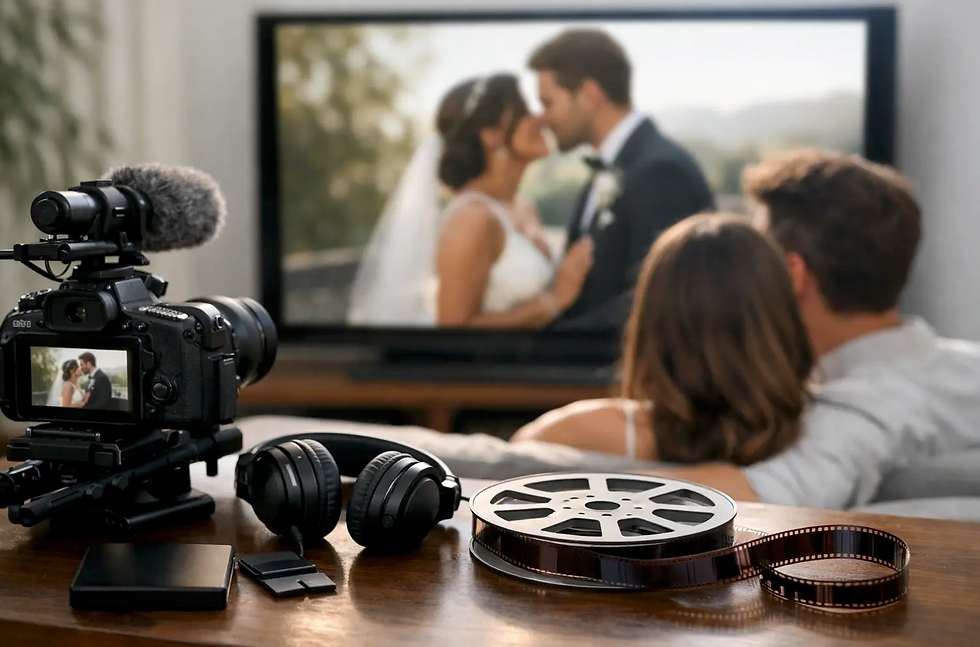
Bride and groom watching highlight reel and full wedding film comparison

Highlight Reel vs Full Film Wedding: Which One Is Right for You?


A highlight reel vs full film wedding comparison helps couples understand whether they want a short cinematic edit or a full wedding video that preserves the entire day.


A few weeks after the wedding, most couples want two very different things at once. They want something beautiful and easy to share right away, and they also want the full experience preserved - the vows, the speeches, the little reactions they missed in real time. That is the real question behind highlight reel vs full film.


If you are comparing videography packages, …especially when reviewing wedding videography cost in NJ this distinction matters more than it may seem on paper. A short cinematic edit and a longer documentary-style wedding film serve different purposes. Neither is automatically better. The right choice depends on how you want to remember your day, what moments matter most to you, and how complete you want your wedding story to feel years from now.

Highlight reel vs full film: what is the difference?


A highlight reel is the short version of your wedding story. It is typically set to music, carefully edited for pacing and emotion, and designed to capture the feel of the day in a condensed format. Think of it as the cinematic portrait of your wedding. It often includes the strongest visual moments - getting ready, the first look, ceremony clips, portraits, dancing, and short pieces of audio from vows or speeches.


A full film is longer and more complete. It usually preserves the ceremony in greater detail, fuller portions of the vows, toasts, key dances, and the natural progression of the day. Rather than focusing only on the most visually striking moments, it allows the story to breathe. You hear people longer. You see

transitions. You relive the pace and emotion of the wedding with more context.


For many couples, the easiest way to understand it is this: the highlight reel is what you watch when you want the feeling of the day in a few minutes. The full film is what you watch when you want to truly go back and experience it again.

Why a highlight reel feels so powerful


There is a reason highlight films are so popular. They are emotional, concise, and easy to revisit. A well-edited highlight reel can capture the mood of a wedding in a way that feels polished and cinematic without requiring a full evening to watch.


This format works especially well for couples who love visual storytelling. If you imagine sweeping venue footage, meaningful glances, a carefully chosen music track, and a film that feels crafted rather than chronological, the highlight reel usually delivers that best. It is also the version most couples share with friends and family because it is accessible and immediate.


At New Jersey weddings, especially at estate venues, waterfront properties, and country clubs, a highlight film can make strong use of the setting. The architecture, the light, the landscape, and the energy of the reception all play beautifully in a shorter cinematic edit. It captures the atmosphere as much as the events.


Still, there is a trade-off. A highlight reel is selective by design. It can be deeply emotional, but it does not usually include every exchange, every line of a toast, or every moment from the ceremony in full length.

What a full film gives you that a highlight reel cannot


A full film has a different kind of value. It is less about distilling the day and more about preserving it. That matters more than many couples realize while they are still planning.


On a wedding day, everything moves quickly. You may not hear every word your partner says during the ceremony because of nerves. You may miss part of a parent's expression during the first dance. During toasts, you may be so focused on the speaker that you do not see your guests reacting around the room. A full film gives those moments back to you.


This is where long-form coverage becomes especially meaningful over time. Years later, couples often return to the parts they once thought were less essential - the full vows, a grandparent's speech, the sound of laughter during cocktail hour, the way the room felt before the ceremony began. Those are not always the moments that make a short reel, but they are often the moments that carry the most emotional weight later.


A full film also tends to reflect the real pacing of the day more honestly. It does not rush from one peak moment to the next. It allows space for anticipation, quiet, and personality. For couples who care about hearing and seeing the full emotional story, that difference is significant.

Highlight reel vs full film: which one should you choose?


The honest answer is that it depends on what you value most.


If your priority is a beautifully edited film that captures the spirit of the day and is easy to share, a highlight reel may be enough. It gives you a polished, cinematic memory that feels emotional and complete in a short format.


If your priority is preserving the actual experience of the day, a full film is usually the stronger choice. It keeps more of what was said, more of what happened, and more of what you may not fully absorb while living it.


For many couples, the best answer is not one or the other. It is both. The highlight reel and the full film do different jobs, and together they create a more complete wedding archive. One gives you artistry and momentum. The other gives you depth and permanence.


That balance matters if your wedding includes personal vows, meaningful speeches, family traditions, or a ceremony with religious or cultural elements that deserve to be preserved in fuller form. A short highlight can capture the emotion of those moments, but a longer film is what protects the details.

Questions to ask before you decide


When couples are weighing highlight reel vs full film, it helps to think less about runtime and more about what they would regret not having.


Ask yourself whether hearing your full vows matters to you. Think about the toasts - are they likely to be quick and simple, or personal and memorable? Consider whether you want a film that feels like a cinematic recap or one that lets you revisit the day with more continuity.


It is also worth thinking about your family. Parents and grandparents often appreciate the full film because it preserves the ceremony and speeches more completely. The highlight reel may be the version everyone shares, but the longer film is often the one that becomes more valuable with time.


Budget does play a role, of course. If you are choosing between options, this is one area where it helps to think long term. Flowers, menus, and decor are part of the wedding day experience, but they do not become more meaningful with age. Your film often does. That does not mean every couple needs every video format. It means the footage that captures voices, movement, and emotion tends to grow in value after the wedding rather than fade.

What experienced wedding filmmakers usually recommend


After filming weddings for many years, one pattern becomes clear. Couples rarely wish they had less coverage. More often, they are grateful when important moments were preserved more fully than they expected to want.


That is especially true for weddings with strong personal storytelling - thoughtful vows, emotional first looks, heartfelt speeches, and family interactions that cannot be staged or recreated. A highlight reel can absolutely showcase those moments, but a full film gives them room to exist naturally.


This is one reason many couples working with Blue Moon Video Productions choose coverage that includes both a cinematic highlight and a longer-form edit. It gives them something beautiful to watch now and something substantial to hold onto later.

The choice is really about how you want to remember your wedding


A wedding video is not just a record of what happened. It is a way of returning to voices, expressions, and moments that photographs alone cannot fully preserve. When you think about highlight reel vs full film, you are really deciding whether you want a beautifully condensed memory, a fuller retelling, or both.


If you picture yourselves watching your wedding film on anniversaries, with future children, or with family years from now, the fuller version often becomes the one that carries the most meaning. The short film will always have its place. It is elegant, emotional, and easy to revisit. But the longer film is where the day keeps living.


Choose the version that matches not only how you want your wedding to look, but how you want it to feel when you come back to it later. Many couples working with a New Jersey wedding videographer choose both a highlight reel and full film to capture their wedding day completely.


If you're planning a wedding in New Jersey and want both a cinematic highlight reel and a full wedding film, you can explore real examples from Blue Moon Video Productions.

bottom of page