Highlight Reel vs Full Film Wedding: Which One Is Right for You?
A highlight reel vs full film wedding comparison helps couples understand whether they want a short cinematic edit or a full wedding video that preserves the entire day.
A few weeks after the wedding, most couples want two very different things at once. They want something beautiful and easy to share right away, and they also want the full experience preserved - the vows, the speeches, the little reactions they missed in real time. That is the real question behind highlight reel vs full film.
If you are comparing videography packages, …especially when reviewing wedding videography cost in NJ this distinction matters more than it may seem on paper. A short cinematic edit and a longer documentary-style wedding film serve different purposes. Neither is automatically better. The right choice depends on how you want to remember your day, what moments matter most to you, and how complete you want your wedding story to feel years from now.
Highlight reel vs full film: what is the difference?
A highlight reel is the short version of your wedding story. It is typically set to music, carefully edited for pacing and emotion, and designed to capture the feel of the day in a condensed format. Think of it as the cinematic portrait of your wedding. It often includes the strongest visual moments - getting ready, the first look, ceremony clips, portraits, dancing, and short pieces of audio from vows or speeches.
A full film is longer and more complete. It usually preserves the ceremony in greater detail, fuller portions of the vows, toasts, key dances, and the natural progression of the day. Rather than focusing only on the most visually striking moments, it allows the story to breathe. You hear people longer. You see
transitions. You relive the pace and emotion of the wedding with more context.
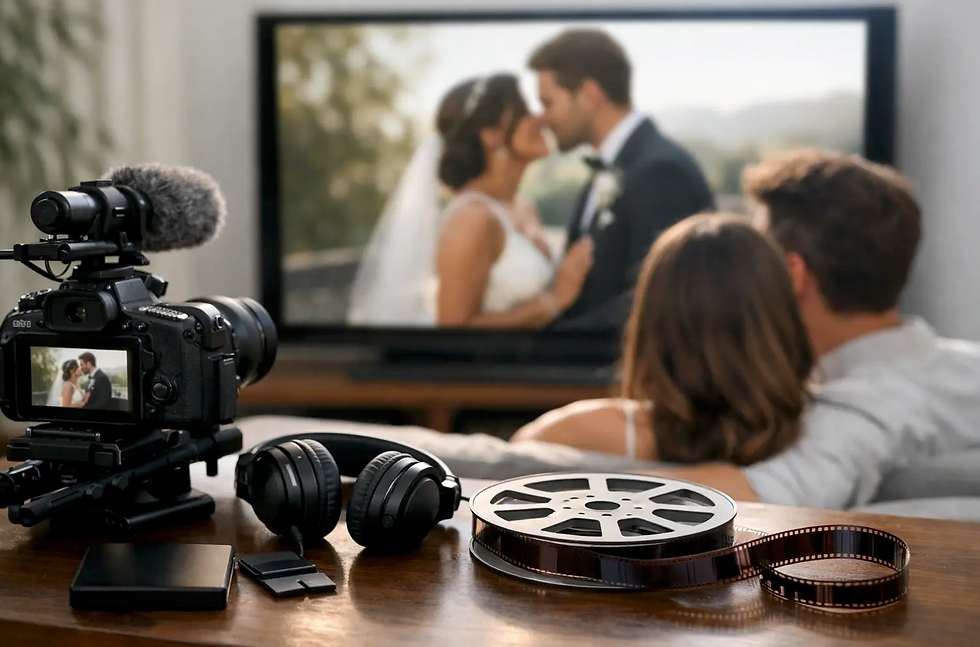
For many couples, the easiest way to understand it is this: the highlight reel is what you watch when you want the feeling of the day in a few minutes. The full film is what you watch when you want to truly go back and experience it again.
Why a highlight reel feels so powerful
There is a reason highlight films are so popular. They are emotional, concise, and easy to revisit. A well-edited highlight reel can capture the mood of a wedding in a way that feels polished and cinematic without requiring a full evening to watch.
This format works especially well for couples who love visual storytelling. If you imagine sweeping venue footage, meaningful glances, a carefully chosen music track, and a film that feels crafted rather than chronological, the highlight reel usually delivers that best. It is also the version most couples share with friends and family because it is accessible and immediate.
At New Jersey weddings, especially at estate venues, waterfront properties, and country clubs, a highlight film can make strong use of the setting. The architecture, the light, the landscape, and the energy of the reception all play beautifully in a shorter cinematic edit. It captures the atmosphere as much as the events.
Still, there is a trade-off. A highlight reel is selective by design. It can be deeply emotional, but it does not usually include every exchange, every line of a toast, or every moment from the ceremony in full length.
What a full film gives you that a highlight reel cannot
A full film has a different kind of value. It is less about distilling the day and more about preserving it. That matters more than many couples realize while they are still planning.
On a wedding day, everything moves quickly. You may not hear every word your partner says during the ceremony because of nerves. You may miss part of a parent's expression during the first dance. During toasts, you may be so focused on the speaker that you do not see your guests reacting around the room. A full film gives those moments back to you.
This is where long-form coverage becomes especially meaningful over time. Years later, couples often return to the parts they once thought were less essential - the full vows, a grandparent's speech, the sound of laughter during cocktail hour, the way the room felt before the ceremony began. Those are not always the moments that make a short reel, but they are often the moments that carry the most emotional weight later.
A full film also tends to reflect the real pacing of the day more honestly. It does not rush from one peak moment to the next. It allows space for anticipation, quiet, and personality. For couples who care about hearing and seeing the full emotional story, that difference is significant.
Highlight reel vs full film: which one should you choose?
The honest answer is that it depends on what you value most.
If your priority is a beautifully edited film that captures the spirit of the day and is easy to share, a highlight reel may be enough. It gives you a polished, cinematic memory that feels emotional and complete in a short format.
If your priority is preserving the actual experience of the day, a full film is usually the stronger choice. It keeps more of what was said, more of what happened, and more of what you may not fully absorb while living it.
For many couples, the best answer is not one or the other. It is both. The highlight reel and the full film do different jobs, and together they create a more complete wedding archive. One gives you artistry and momentum. The other gives you depth and permanence.
That balance matters if your wedding includes personal vows, meaningful speeches, family traditions, or a ceremony with religious or cultural elements that deserve to be preserved in fuller form. A short highlight can capture the emotion of those moments, but a longer film is what protects the details.
Questions to ask before you decide
When couples are weighing highlight reel vs full film, it helps to think less about runtime and more about what they would regret not having.
Ask yourself whether hearing your full vows matters to you. Think about the toasts - are they likely to be quick and simple, or personal and memorable? Consider whether you want a film that feels like a cinematic recap or one that lets you revisit the day with more continuity.
It is also worth thinking about your family. Parents and grandparents often appreciate the full film because it preserves the ceremony and speeches more completely. The highlight reel may be the version everyone shares, but the longer film is often the one that becomes more valuable with time.
Budget does play a role, of course. If you are choosing between options, this is one area where it helps to think long term. Flowers, menus, and decor are part of the wedding day experience, but they do not become more meaningful with age. Your film often does. That does not mean every couple needs every video format. It means the footage that captures voices, movement, and emotion tends to grow in value after the wedding rather than fade.
What experienced wedding filmmakers usually recommend
After filming weddings for many years, one pattern becomes clear. Couples rarely wish they had less coverage. More often, they are grateful when important moments were preserved more fully than they expected to want.
That is especially true for weddings with strong personal storytelling - thoughtful vows, emotional first looks, heartfelt speeches, and family interactions that cannot be staged or recreated. A highlight reel can absolutely showcase those moments, but a full film gives them room to exist naturally.
This is one reason many couples working with Blue Moon Video Productions choose coverage that includes both a cinematic highlight and a longer-form edit. It gives them something beautiful to watch now and something substantial to hold onto later.
The choice is really about how you want to remember your wedding
A wedding video is not just a record of what happened. It is a way of returning to voices, expressions, and moments that photographs alone cannot fully preserve. When you think about highlight reel vs full film, you are really deciding whether you want a beautifully condensed memory, a fuller retelling, or both.
If you picture yourselves watching your wedding film on anniversaries, with future children, or with family years from now, the fuller version often becomes the one that carries the most meaning. The short film will always have its place. It is elegant, emotional, and easy to revisit. But the longer film is where the day keeps living.
Choose the version that matches not only how you want your wedding to look, but how you want it to feel when you come back to it later. Many couples working with a New Jersey wedding videographer choose both a highlight reel and full film to capture their wedding day completely.
If you're planning a wedding in New Jersey and want both a cinematic highlight reel and a full wedding film, you can explore real examples from Blue Moon Video Productions.