

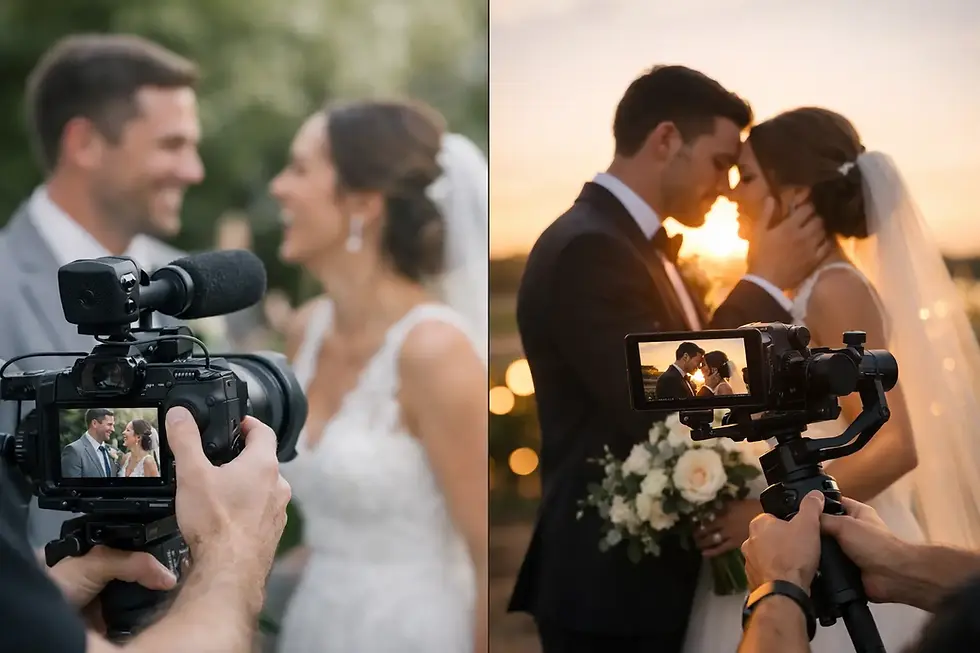
Documentary vs Cinematic Wedding Video: What Couples Need to Know
The difference between a documentary vs cinematic wedding video usually becomes clear the moment couples picture how they want to remember their day. Some want to hear the full vows, the complete speeches, and the natural rhythm of the celebration exactly as it happened. Others picture a beautifully edited film with dramatic visuals, carefully chosen music, and a story that feels as polished as it is emotional. Both approaches can be meaningful. The right choice depends on what you want to relive years from now.
Documentary vs cinematic wedding video: what changes?
At the simplest level, a documentary wedding video focuses on preserving real events in a more complete and chronological way. A cinematic wedding video shapes the footage into a more stylized film experience. That sounds straightforward, but in practice, the difference affects everything from filming style to editing pace to what moments receive the most attention.
A documentary approach is built around coverage. The goal is to record the wedding day faithfully, with strong attention to live audio and full moments. That often includes the complete ceremony, full speeches, and longer stretches of real-time action. The finished film may feel less polished in a Hollywood sense, but it gives you something many couples value deeply later on - a true record of what happened and what was said.
A cinematic approach is built around storytelling. Instead of presenting the day as a full record, it selects the strongest visuals, emotions, and sounds and shapes them into a shorter, more artistic film. Music, pacing, composition, color, and transitions all play a larger role. The result often feels immersive and emotional, with the wedding day presented through a crafted narrative rather than simple chronology.
Neither style is automatically better. They answer different questions. One asks, "How do we preserve the day?" The other asks, "How do we tell the story of the day?"
What a documentary wedding video feels like
A documentary wedding film tends to feel honest, direct, and complete. It often follows the actual sequence of the wedding day, allowing moments to unfold with minimal interference. If your father gave a heartfelt eight-minute toast, you will likely be able to watch all eight minutes. If your ceremony included meaningful readings, personal vows, or cultural traditions, those are usually preserved in full.
For many couples, this style becomes more valuable over time. Right after the wedding, a highlight film may be what gets shared with family and friends. Ten years later, couples often want to hear voices clearly, see loved ones as they were, and revisit full interactions that passed quickly in real life.
Documentary coverage can also be especially important for weddings with strong family traditions, religious ceremonies, or relatives traveling from far away. In those cases, the wedding is not only an event. It is a family record.
That said, documentary does not mean unprofessional or visually plain. Experienced filmmakers still use thoughtful camera placement, clean audio capture, and polished editing. The difference is that the editing usually serves clarity and continuity more than style.
What a cinematic wedding video feels like
A cinematic wedding film is designed to make you feel the day as much as remember it. It often uses carefully framed shots, movement, music, and layered audio from vows or speeches to create a strong emotional arc. Instead of showing everything, it focuses on the moments that best express the atmosphere and meaning of the day.
This style works beautifully for couples who want their wedding film to feel elevated and artful. The anticipation while getting ready, the way the light moved across the venue, the reaction during a first look, the energy of the dance floor - these moments can be shaped into a film that feels timeless and expressive.
Cinematic editing also tends to be tighter. A five-minute or eight-minute highlight film may carry the emotional weight of a twelve-hour wedding day because the strongest visuals and audio are carefully chosen and arranged. Done well, it feels natural rather than staged.
The trade-off is that not every moment appears in full. You may hear the most meaningful lines from the vows and speeches, but not necessarily every word. If you care most about reliving the atmosphere and emotion, that can be exactly right. If you want complete documentation, it may leave out parts you wish had been preserved in full.
The biggest decision is not style. It is memory.
When couples compare styles, they often start by asking what looks better. A more useful question is what kind of memory they want to keep.
If you know you will want to sit down with family and watch the ceremony exactly as it happened, documentary coverage matters. If hearing every speech in full feels essential, documentary coverage matters. If your wedding includes traditions that deserve complete preservation, documentary coverage matters.
If you want a film that captures the feeling of the day in a visually powerful way, cinematic storytelling may be the better fit. If you imagine sharing a beautifully edited highlight film with friends and revisiting it on anniversaries, cinematic may suit you naturally.
For most couples, the answer is not purely one or the other. It is a combination.
Many couples searching for a New Jersey wedding videographer end up choosing a blend of documentary and cinematic wedding video styles.
Documentary vs cinematic wedding video for real weddings
In real wedding coverage, the strongest approach is often a blend of both styles. A wedding day has moments that need full preservation and moments that benefit from artistic storytelling. The vows, speeches, and formal events usually deserve strong documentary treatment. The in-between moments - a quiet exchange during portraits, the energy of cocktail hour, the texture of the venue at sunset - often shine in a cinematic film.
That balance is where experienced videography teams bring the most value. They know when to step back and let the day unfold naturally, and when to create the kind of visuals that give the final film shape and emotion.
For example, at a large New Jersey estate wedding, the scale of the venue and the elegance of the setting may lend themselves beautifully to cinematic visuals. At the same time, the ceremony in a family church and the reception toasts may be the moments your family wants preserved in full. The best coverage does not force the whole day into one category. It respects what each moment needs.
That is why many couples look for both a highlight film and a longer-form wedding movie. One gives you the emotional story in a concise, polished format. The other preserves the details that would be difficult to replace.
How to choose the right fit for your wedding
Start by thinking less about trends and more about your priorities. Ask yourselves what you would regret not having.
If missing full audio from the ceremony or speeches would bother you, do not rely only on a short cinematic edit. If you love the idea of a film that feels refined, emotional, and visually dramatic, do not choose coverage that only delivers raw chronological footage.
It also helps to consider your wedding itself. A shorter celebration with a simple timeline may work beautifully with a cinematic focus. A wedding with multiple locations, religious traditions, or a reception full of meaningful speeches may benefit from broader documentary coverage.
When you speak with a videographer, ask to see both highlight films and longer-form edits. A polished trailer tells you one thing. A full ceremony or complete wedding film tells you something equally important about sound quality, consistency, and how well the team handles real moments.
This is also where experience matters. A skilled wedding filmmaker knows how to capture authentic moments without making the day feel like a production. They understand pacing, lighting, audio, and timing, but they also understand people.
That balance is what allows a film to feel natural and polished at the same time.
At Blue Moon Video Productions, that balance is central to how wedding stories are preserved - not just as beautiful images, but as real memories couples can return to for years.
There is no wrong answer, only the right one for you
Some couples want a wedding film that plays like a beautifully crafted short movie. Others want complete coverage that keeps every important word intact. Most want both the emotion and the record.
If you are choosing between documentary and cinematic, the best decision usually comes from imagining a quiet night years from now. Picture what you want to press play on. If you want to feel the day all over again, cinematic storytelling may lead the way. If you want to hear every promise, laugh, and toast exactly as it happened, documentary coverage may matter more. And if you want both, that is often the strongest choice of all.
Your wedding happens once. The film should give you a way to return to it that still feels true when the flowers are gone, the music has ended, and the day has become part of your family history.
Understanding documentary vs cinematic wedding video options helps couples choose the right coverage for their wedding day.
If you're planning a wedding in New Jersey and want a balance of documentary coverage and cinematic storytelling, you can explore full wedding films from Blue Moon Video Productions.
