top of page
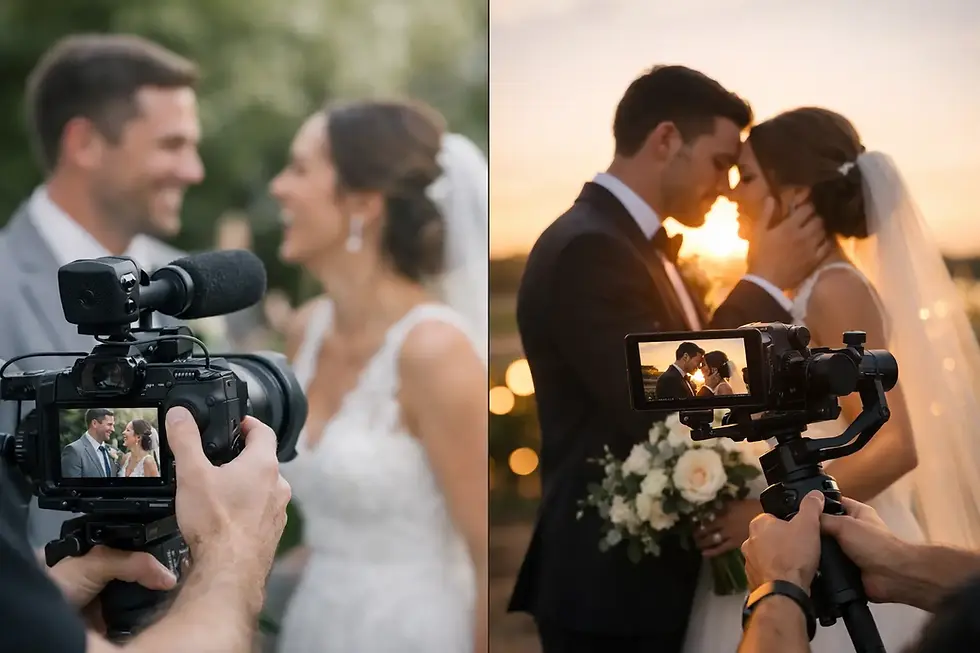
Wedding videographer team with one shooter vs two shooters capturing ceremony and reactions

One Videographer vs Two Shooters: What Couples Need to Know


A quiet exchange during the first look. Your partner’s reaction as the ceremony doors open. A parent’s expression during the speeches that you may not even notice in real time. When couples start comparing one videographer vs two shooters, what they are really asking is how much of their wedding day a wedding videographer can realistically capture at once, and how complete they want their final wedding video to feel.


That question matters because wedding days don’t unfold in a straight line. Hair and makeup may still be finishing while details are being filmed. Cocktail hour may begin while family photos are wrapping up. During the ceremony, the person speaking, the couple’s reaction, and the guests’ emotions are all happening at the same time. The number of wedding videographers on site directly affects how much of that can be captured and how the story comes together in the final film.


Many couples planning a wedding in New Jersey choose between one videographer vs two shooters based on their timeline, venue, and coverage needs.

One videographer vs two shooters: what changes?


The biggest difference between one videographer vs two shooters is not just coverage — it’s what is actually possible to capture throughout the day. One experienced wedding videographer can absolutely create a beautiful wedding film, especially with a well-planned timeline and clear priorities. They know how to anticipate moments, move efficiently, and focus on what matters most. But at the end of the day, one person can only be in one place at a time.


With two wedding videographers, that limitation changes immediately. Instead of choosing between the couple’s reaction or the parents’ reaction, both can be captured. Instead of relying on a single angle during the ceremony, multiple perspectives can be filmed at the same time, making the final wedding video feel more immersive and cinematic. This is especially important during moments that cannot be repeated, where having more than one angle adds real depth to the story.

Another key difference is how the day is approached. With one wedding videographer, filming tends to be more selective. The focus stays on key events, and there is less flexibility to move between multiple moments happening at once. With two shooters, there is the ability to cover different parts of the day simultaneously, manage more equipment, and capture a wider range of angles, reactions, and details. This not only improves coverage, but also gives the final wedding film more variety, more energy, and a more complete representation of the day.

When one videographer is enough


There are situations where one wedding videographer can be the right fit, especially for weddings that are smaller, simpler, and more contained in one location. If you are planning a more intimate celebration with a single getting-ready space, a shorter guest list, and a straightforward timeline, one experienced videographer may be able to cover the day effectively. These types of weddings tend to move at a calmer pace, with fewer overlapping moments, which makes it easier for one person to manage.


A single wedding videographer can also work well when your priorities are focused on capturing the key parts of the day. If your main goal is to preserve the ceremony, major reception events, and the overall feeling of the wedding, one videographer can deliver a strong final film, especially when the timeline allows enough time for transitions between each part of the day.


However, it’s important to understand the trade-offs. One wedding videographer can only be in one place at a time. If both partners are getting ready in separate locations, coverage will need to be split or focused on one side of the day. During fast-moving moments, such as the ceremony or reception, there will be fewer angles, fewer reaction shots, and less flexibility to capture multiple things happening at once.


For couples who are comfortable with a more streamlined and selective version of their wedding story, one videographer can absolutely work. The key is understanding that the coverage will be more focused, with some natural limitations in how much of the day can be captured at the same time.

When two shooters make a real difference


Two shooters make the biggest difference on wedding days that are more dynamic, layered, or spread across multiple locations. When you have separate preparation locations, a traditional ceremony, or a full reception with a lot of guest interaction, having more than one wedding videographer allows the day to be captured in a much more complete and natural way.


This becomes most important during moments that cannot be repeated. The ceremony is the clearest example. With one wedding videographer, the focus is typically on a single primary angle. With two shooters, one can stay locked on the couple while the other captures reactions, processional entrances, wider views, and close-up emotional moments from family and guests. The result is not just more footage, but a more complete and emotionally layered wedding film.


Reception coverage also improves significantly with two videographers. While one focuses on key events like toasts and formal dances, the second can capture guest reactions, energy on the dance floor, and the overall atmosphere of the room. This allows the final wedding video to feel more alive and immersive, especially during high-energy parts of the night or weddings with cultural traditions and multiple events happening back-to-back.


There is also a major advantage in how the day is managed behind the scenes. Larger venues such as estates, country clubs, churches, and waterfront locations often require movement, setup, and timing coordination. With two shooters, one videographer can be in position for the next important moment while the other is finishing coverage elsewhere. This keeps everything running smoothly and helps ensure that nothing important is missed.


When a wedding has multiple moving parts, overlapping moments, or a full timeline, having two wedding videographers is not just an upgrade in coverage — it is what allows the final film to feel complete, cinematic, and true to the entire day.

Audio, angles, and peace of mind


Couples often think first about visuals, but audio is just as important. Your vows, the officiant's words, and the speeches are part of what makes a wedding film feel personal years later. Whether you have one videographer or two, professional audio planning should already be built into the day.


Where two shooters help is redundancy and responsiveness. One person can stay locked on the main event while the other adjusts position, monitors changing conditions, or captures emotional cutaways that support the spoken words in the final edit. That extra layer can be especially useful in churches, outdoor ceremonies, or receptions where the lighting and sound environment shifts throughout the evening.


It also creates a little more breathing room. Weddings move fast. Even with excellent planning, something unexpected always happens. A second shooter gives the team more options when timelines run late, rooms change quickly, or a moment unfolds somewhere you did not expect.

The editing difference in one videographer vs two shooters


From a couple's perspective, it is easy to think of this choice as a day-of staffing decision. But it also affects the final film.


With one videographer, the story often feels more intimate and streamlined. The footage may be built around decisive moments, cleaner continuity, and a focused perspective. In the hands of an experienced editor, that can be elegant and emotionally strong.


With two shooters, there is usually more visual depth to work with in post-production. Editors can cut between reactions, blend wide and close compositions, and shape scenes with more rhythm. A first look can show both of your faces at once. A speech can include the speaker, your response, and a parent's tears across the room. That added coverage helps the film feel more dimensional.


Neither approach is automatically better in every case. The better question is whether your wedding day has enough simultaneous action and emotional complexity to benefit from the second perspective.

How to decide what your wedding actually needs


The best way to decide between one videographer vs two shooters starts with your timeline, not just your budget. Where each of you is getting ready, how much travel is involved, whether your ceremony has movement restrictions, and how many events are happening during the reception all play a major role. When multiple parts of the day are happening at the same time, having more than one wedding videographer becomes much more important.


It also helps to think about how you want your wedding video to feel when you watch it back. Some couples are primarily focused on capturing the ceremony, speeches, and key moments clearly. Others want a more complete and layered film that includes reactions, atmosphere, and everything happening around them throughout the day. Both are valid — they simply lead to different levels of wedding videography coverage.


If you’re unsure, one of the best things you can do is ask your wedding videographer how they would approach your specific wedding with one shooter versus two. The answer should never be generic. It should be based on your venue, your timeline, your ceremony setup, and the moments that matter most to you.


At Blue Moon Video Productions, this is part of the planning process. After filming weddings for over 17 years, it’s usually very clear what level of coverage a wedding needs once the timeline is laid out. The goal is not to push more coverage, but to make sure nothing important is missed and that your wedding video reflects the full experience of the day.

A practical rule of thumb


If your wedding is intimate, takes place in one main location, and has a relaxed timeline with space between events, one wedding videographer may be the right fit. In these situations, the day is easier to manage with a single shooter, and the most important moments can still be captured well.


If your wedding includes separate preparation locations, a larger guest count, a formal ceremony, or a reception where multiple moments are happening at once, having two shooters will almost always provide stronger and more complete wedding videography coverage. It allows more of the day to be captured as it naturally unfolds, without having to choose between moments.


The goal is not to have more cameras in the room just for the sake of it. The goal is to preserve the feeling of your wedding day in a way that still feels complete years from now.


That’s the real decision when comparing one videographer vs two shooters. You’re deciding how much of your wedding story can be captured at once, and how fully those once-in-a-lifetime moments are preserved in your final wedding video.


The best choice is the one that matches how your wedding day will actually unfold — not a generic idea of what coverage is supposed to look like, but what your specific day truly needs.


If you're planning a wedding in New Jersey and want help deciding between one videographer vs two shooters, you can explore real wedding films and coverage options from Blue Moon Video Productions.
Comparison of documentary vs cinematic wedding video styles showing real moments and cinematic shots

Documentary vs Cinematic Wedding Video: What Couples Need to Know


The difference between a documentary vs cinematic wedding video usually becomes clear the moment couples picture how they want to remember their day. Some want to hear the full vows, the complete speeches, and the natural rhythm of the celebration exactly as it happened. Others picture a beautifully edited film with dramatic visuals, carefully chosen music, and a story that feels as polished as it is emotional. Both approaches can be meaningful. The right choice depends on what you want to relive years from now.

Documentary vs cinematic wedding video: what changes?


At the simplest level, a documentary wedding video focuses on preserving real events in a more complete and chronological way. A cinematic wedding video shapes the footage into a more stylized film experience. That sounds straightforward, but in practice, the difference affects everything from filming style to editing pace to what moments receive the most attention.


A documentary approach is built around coverage. The goal is to record the wedding day faithfully, with strong attention to live audio and full moments. That often includes the complete ceremony, full speeches, and longer stretches of real-time action. The finished film may feel less polished in a Hollywood sense, but it gives you something many couples value deeply later on - a true record of what happened and what was said.


A cinematic approach is built around storytelling. Instead of presenting the day as a full record, it selects the strongest visuals, emotions, and sounds and shapes them into a shorter, more artistic film. Music, pacing, composition, color, and transitions all play a larger role. The result often feels immersive and emotional, with the wedding day presented through a crafted narrative rather than simple chronology.


Neither style is automatically better. They answer different questions. One asks, "How do we preserve the day?" The other asks, "How do we tell the story of the day?"

What a documentary wedding video feels like


A documentary wedding film tends to feel honest, direct, and complete. It often follows the actual sequence of the wedding day, allowing moments to unfold with minimal interference. If your father gave a heartfelt eight-minute toast, you will likely be able to watch all eight minutes. If your ceremony included meaningful readings, personal vows, or cultural traditions, those are usually preserved in full.

For many couples, this style becomes more valuable over time. Right after the wedding, a highlight film may be what gets shared with family and friends. Ten years later, couples often want to hear voices clearly, see loved ones as they were, and revisit full interactions that passed quickly in real life.


Documentary coverage can also be especially important for weddings with strong family traditions, religious ceremonies, or relatives traveling from far away. In those cases, the wedding is not only an event. It is a family record.


That said, documentary does not mean unprofessional or visually plain. Experienced filmmakers still use thoughtful camera placement, clean audio capture, and polished editing. The difference is that the editing usually serves clarity and continuity more than style.

What a cinematic wedding video feels like


A cinematic wedding film is designed to make you feel the day as much as remember it. It often uses carefully framed shots, movement, music, and layered audio from vows or speeches to create a strong emotional arc. Instead of showing everything, it focuses on the moments that best express the atmosphere and meaning of the day.


This style works beautifully for couples who want their wedding film to feel elevated and artful. The anticipation while getting ready, the way the light moved across the venue, the reaction during a first look, the energy of the dance floor - these moments can be shaped into a film that feels timeless and expressive.


Cinematic editing also tends to be tighter. A five-minute or eight-minute highlight film may carry the emotional weight of a twelve-hour wedding day because the strongest visuals and audio are carefully chosen and arranged. Done well, it feels natural rather than staged.


The trade-off is that not every moment appears in full. You may hear the most meaningful lines from the vows and speeches, but not necessarily every word. If you care most about reliving the atmosphere and emotion, that can be exactly right. If you want complete documentation, it may leave out parts you wish had been preserved in full.

The biggest decision is not style. It is memory.


When couples compare styles, they often start by asking what looks better. A more useful question is what kind of memory they want to keep.


If you know you will want to sit down with family and watch the ceremony exactly as it happened, documentary coverage matters. If hearing every speech in full feels essential, documentary coverage matters. If your wedding includes traditions that deserve complete preservation, documentary coverage matters.


If you want a film that captures the feeling of the day in a visually powerful way, cinematic storytelling may be the better fit. If you imagine sharing a beautifully edited highlight film with friends and revisiting it on anniversaries, cinematic may suit you naturally.


For most couples, the answer is not purely one or the other. It is a combination.


Many couples searching for a New Jersey wedding videographer end up choosing a blend of documentary and cinematic wedding video styles.

Documentary vs cinematic wedding video for real weddings


In real wedding coverage, the strongest approach is often a blend of both styles. A wedding day has moments that need full preservation and moments that benefit from artistic storytelling. The vows, speeches, and formal events usually deserve strong documentary treatment. The in-between moments - a quiet exchange during portraits, the energy of cocktail hour, the texture of the venue at sunset - often shine in a cinematic film.


That balance is where experienced videography teams bring the most value. They know when to step back and let the day unfold naturally, and when to create the kind of visuals that give the final film shape and emotion.


For example, at a large New Jersey estate wedding, the scale of the venue and the elegance of the setting may lend themselves beautifully to cinematic visuals. At the same time, the ceremony in a family church and the reception toasts may be the moments your family wants preserved in full. The best coverage does not force the whole day into one category. It respects what each moment needs.


That is why many couples look for both a highlight film and a longer-form wedding movie. One gives you the emotional story in a concise, polished format. The other preserves the details that would be difficult to replace.

How to choose the right fit for your wedding


Start by thinking less about trends and more about your priorities. Ask yourselves what you would regret not having.


If missing full audio from the ceremony or speeches would bother you, do not rely only on a short cinematic edit. If you love the idea of a film that feels refined, emotional, and visually dramatic, do not choose coverage that only delivers raw chronological footage.


It also helps to consider your wedding itself. A shorter celebration with a simple timeline may work beautifully with a cinematic focus. A wedding with multiple locations, religious traditions, or a reception full of meaningful speeches may benefit from broader documentary coverage.


When you speak with a videographer, ask to see both highlight films and longer-form edits. A polished trailer tells you one thing. A full ceremony or complete wedding film tells you something equally important about sound quality, consistency, and how well the team handles real moments.


This is also where experience matters. A skilled wedding filmmaker knows how to capture authentic moments without making the day feel like a production. They understand pacing, lighting, audio, and timing, but they also understand people.

That balance is what allows a film to feel natural and polished at the same time.


At Blue Moon Video Productions, that balance is central to how wedding stories are preserved - not just as beautiful images, but as real memories couples can return to for years.

There is no wrong answer, only the right one for you


Some couples want a wedding film that plays like a beautifully crafted short movie. Others want complete coverage that keeps every important word intact. Most want both the emotion and the record.


If you are choosing between documentary and cinematic, the best decision usually comes from imagining a quiet night years from now. Picture what you want to press play on. If you want to feel the day all over again, cinematic storytelling may lead the way. If you want to hear every promise, laugh, and toast exactly as it happened, documentary coverage may matter more. And if you want both, that is often the strongest choice of all.


Your wedding happens once. The film should give you a way to return to it that still feels true when the flowers are gone, the music has ended, and the day has become part of your family history.


Understanding documentary vs cinematic wedding video options helps couples choose the right coverage for their wedding day.


If you're planning a wedding in New Jersey and want a balance of documentary coverage and cinematic storytelling, you can explore full wedding films from Blue Moon Video Productions.

Bride and groom watching highlight reel and full wedding film comparison

Highlight Reel vs Full Film Wedding: Which One Is Right for You?


A highlight reel vs full film wedding comparison helps couples understand whether they want a short cinematic edit or a full wedding video that preserves the entire day.


A few weeks after the wedding, most couples want two very different things at once. They want something beautiful and easy to share right away, and they also want the full experience preserved - the vows, the speeches, the little reactions they missed in real time. That is the real question behind highlight reel vs full film.


If you are comparing videography packages, …especially when reviewing wedding videography cost in NJ this distinction matters more than it may seem on paper. A short cinematic edit and a longer documentary-style wedding film serve different purposes. Neither is automatically better. The right choice depends on how you want to remember your day, what moments matter most to you, and how complete you want your wedding story to feel years from now.

Highlight reel vs full film: what is the difference?


A highlight reel is the short version of your wedding story. It is typically set to music, carefully edited for pacing and emotion, and designed to capture the feel of the day in a condensed format. Think of it as the cinematic portrait of your wedding. It often includes the strongest visual moments - getting ready, the first look, ceremony clips, portraits, dancing, and short pieces of audio from vows or speeches.


A full film is longer and more complete. It usually preserves the ceremony in greater detail, fuller portions of the vows, toasts, key dances, and the natural progression of the day. Rather than focusing only on the most visually striking moments, it allows the story to breathe. You hear people longer. You see

transitions. You relive the pace and emotion of the wedding with more context.


For many couples, the easiest way to understand it is this: the highlight reel is what you watch when you want the feeling of the day in a few minutes. The full film is what you watch when you want to truly go back and experience it again.

Why a highlight reel feels so powerful


There is a reason highlight films are so popular. They are emotional, concise, and easy to revisit. A well-edited highlight reel can capture the mood of a wedding in a way that feels polished and cinematic without requiring a full evening to watch.


This format works especially well for couples who love visual storytelling. If you imagine sweeping venue footage, meaningful glances, a carefully chosen music track, and a film that feels crafted rather than chronological, the highlight reel usually delivers that best. It is also the version most couples share with friends and family because it is accessible and immediate.


At New Jersey weddings, especially at estate venues, waterfront properties, and country clubs, a highlight film can make strong use of the setting. The architecture, the light, the landscape, and the energy of the reception all play beautifully in a shorter cinematic edit. It captures the atmosphere as much as the events.


Still, there is a trade-off. A highlight reel is selective by design. It can be deeply emotional, but it does not usually include every exchange, every line of a toast, or every moment from the ceremony in full length.

What a full film gives you that a highlight reel cannot


A full film has a different kind of value. It is less about distilling the day and more about preserving it. That matters more than many couples realize while they are still planning.


On a wedding day, everything moves quickly. You may not hear every word your partner says during the ceremony because of nerves. You may miss part of a parent's expression during the first dance. During toasts, you may be so focused on the speaker that you do not see your guests reacting around the room. A full film gives those moments back to you.


This is where long-form coverage becomes especially meaningful over time. Years later, couples often return to the parts they once thought were less essential - the full vows, a grandparent's speech, the sound of laughter during cocktail hour, the way the room felt before the ceremony began. Those are not always the moments that make a short reel, but they are often the moments that carry the most emotional weight later.


A full film also tends to reflect the real pacing of the day more honestly. It does not rush from one peak moment to the next. It allows space for anticipation, quiet, and personality. For couples who care about hearing and seeing the full emotional story, that difference is significant.

Highlight reel vs full film: which one should you choose?


The honest answer is that it depends on what you value most.


If your priority is a beautifully edited film that captures the spirit of the day and is easy to share, a highlight reel may be enough. It gives you a polished, cinematic memory that feels emotional and complete in a short format.


If your priority is preserving the actual experience of the day, a full film is usually the stronger choice. It keeps more of what was said, more of what happened, and more of what you may not fully absorb while living it.


For many couples, the best answer is not one or the other. It is both. The highlight reel and the full film do different jobs, and together they create a more complete wedding archive. One gives you artistry and momentum. The other gives you depth and permanence.


That balance matters if your wedding includes personal vows, meaningful speeches, family traditions, or a ceremony with religious or cultural elements that deserve to be preserved in fuller form. A short highlight can capture the emotion of those moments, but a longer film is what protects the details.

Questions to ask before you decide


When couples are weighing highlight reel vs full film, it helps to think less about runtime and more about what they would regret not having.


Ask yourself whether hearing your full vows matters to you. Think about the toasts - are they likely to be quick and simple, or personal and memorable? Consider whether you want a film that feels like a cinematic recap or one that lets you revisit the day with more continuity.


It is also worth thinking about your family. Parents and grandparents often appreciate the full film because it preserves the ceremony and speeches more completely. The highlight reel may be the version everyone shares, but the longer film is often the one that becomes more valuable with time.


Budget does play a role, of course. If you are choosing between options, this is one area where it helps to think long term. Flowers, menus, and decor are part of the wedding day experience, but they do not become more meaningful with age. Your film often does. That does not mean every couple needs every video format. It means the footage that captures voices, movement, and emotion tends to grow in value after the wedding rather than fade.

What experienced wedding filmmakers usually recommend


After filming weddings for many years, one pattern becomes clear. Couples rarely wish they had less coverage. More often, they are grateful when important moments were preserved more fully than they expected to want.


That is especially true for weddings with strong personal storytelling - thoughtful vows, emotional first looks, heartfelt speeches, and family interactions that cannot be staged or recreated. A highlight reel can absolutely showcase those moments, but a full film gives them room to exist naturally.


This is one reason many couples working with Blue Moon Video Productions choose coverage that includes both a cinematic highlight and a longer-form edit. It gives them something beautiful to watch now and something substantial to hold onto later.

The choice is really about how you want to remember your wedding


A wedding video is not just a record of what happened. It is a way of returning to voices, expressions, and moments that photographs alone cannot fully preserve. When you think about highlight reel vs full film, you are really deciding whether you want a beautifully condensed memory, a fuller retelling, or both.


If you picture yourselves watching your wedding film on anniversaries, with future children, or with family years from now, the fuller version often becomes the one that carries the most meaning. The short film will always have its place. It is elegant, emotional, and easy to revisit. But the longer film is where the day keeps living.


Choose the version that matches not only how you want your wedding to look, but how you want it to feel when you come back to it later. Many couples working with a New Jersey wedding videographer choose both a highlight reel and full film to capture their wedding day completely.


If you're planning a wedding in New Jersey and want both a cinematic highlight reel and a full wedding film, you can explore real examples from Blue Moon Video Productions.

bottom of page