top of page
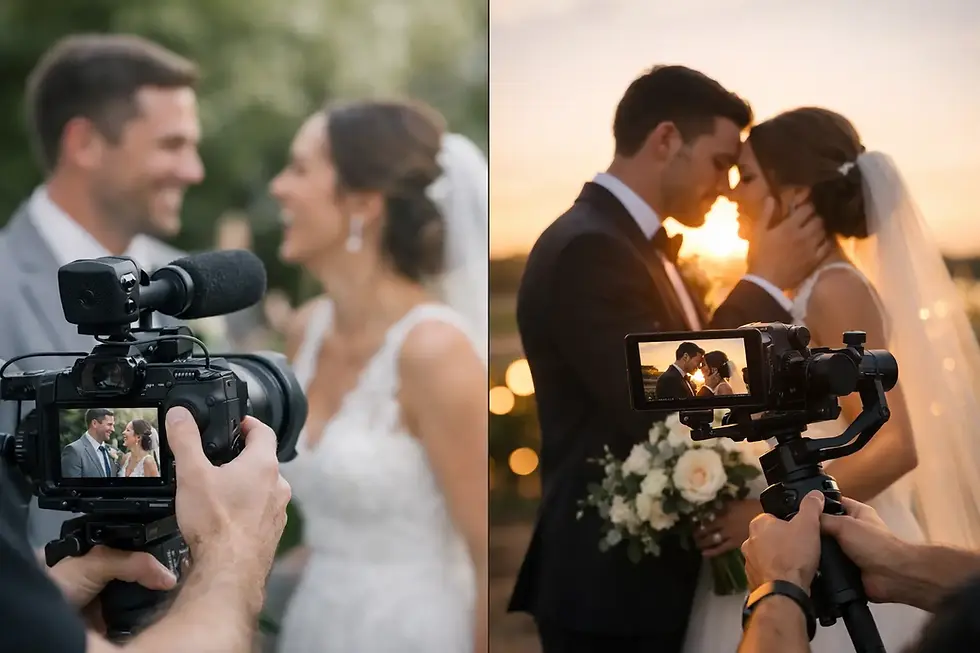
Comparison of documentary vs cinematic wedding video styles showing real moments and cinematic shots

Documentary vs Cinematic Wedding Video: What Couples Need to Know


The difference between a documentary vs cinematic wedding video usually becomes clear the moment couples picture how they want to remember their day. Some want to hear the full vows, the complete speeches, and the natural rhythm of the celebration exactly as it happened. Others picture a beautifully edited film with dramatic visuals, carefully chosen music, and a story that feels as polished as it is emotional. Both approaches can be meaningful. The right choice depends on what you want to relive years from now.

Documentary vs cinematic wedding video: what changes?


At the simplest level, a documentary wedding video focuses on preserving real events in a more complete and chronological way. A cinematic wedding video shapes the footage into a more stylized film experience. That sounds straightforward, but in practice, the difference affects everything from filming style to editing pace to what moments receive the most attention.


A documentary approach is built around coverage. The goal is to record the wedding day faithfully, with strong attention to live audio and full moments. That often includes the complete ceremony, full speeches, and longer stretches of real-time action. The finished film may feel less polished in a Hollywood sense, but it gives you something many couples value deeply later on - a true record of what happened and what was said.


A cinematic approach is built around storytelling. Instead of presenting the day as a full record, it selects the strongest visuals, emotions, and sounds and shapes them into a shorter, more artistic film. Music, pacing, composition, color, and transitions all play a larger role. The result often feels immersive and emotional, with the wedding day presented through a crafted narrative rather than simple chronology.


Neither style is automatically better. They answer different questions. One asks, "How do we preserve the day?" The other asks, "How do we tell the story of the day?"

What a documentary wedding video feels like


A documentary wedding film tends to feel honest, direct, and complete. It often follows the actual sequence of the wedding day, allowing moments to unfold with minimal interference. If your father gave a heartfelt eight-minute toast, you will likely be able to watch all eight minutes. If your ceremony included meaningful readings, personal vows, or cultural traditions, those are usually preserved in full.

For many couples, this style becomes more valuable over time. Right after the wedding, a highlight film may be what gets shared with family and friends. Ten years later, couples often want to hear voices clearly, see loved ones as they were, and revisit full interactions that passed quickly in real life.


Documentary coverage can also be especially important for weddings with strong family traditions, religious ceremonies, or relatives traveling from far away. In those cases, the wedding is not only an event. It is a family record.


That said, documentary does not mean unprofessional or visually plain. Experienced filmmakers still use thoughtful camera placement, clean audio capture, and polished editing. The difference is that the editing usually serves clarity and continuity more than style.

What a cinematic wedding video feels like


A cinematic wedding film is designed to make you feel the day as much as remember it. It often uses carefully framed shots, movement, music, and layered audio from vows or speeches to create a strong emotional arc. Instead of showing everything, it focuses on the moments that best express the atmosphere and meaning of the day.


This style works beautifully for couples who want their wedding film to feel elevated and artful. The anticipation while getting ready, the way the light moved across the venue, the reaction during a first look, the energy of the dance floor - these moments can be shaped into a film that feels timeless and expressive.


Cinematic editing also tends to be tighter. A five-minute or eight-minute highlight film may carry the emotional weight of a twelve-hour wedding day because the strongest visuals and audio are carefully chosen and arranged. Done well, it feels natural rather than staged.


The trade-off is that not every moment appears in full. You may hear the most meaningful lines from the vows and speeches, but not necessarily every word. If you care most about reliving the atmosphere and emotion, that can be exactly right. If you want complete documentation, it may leave out parts you wish had been preserved in full.

The biggest decision is not style. It is memory.


When couples compare styles, they often start by asking what looks better. A more useful question is what kind of memory they want to keep.


If you know you will want to sit down with family and watch the ceremony exactly as it happened, documentary coverage matters. If hearing every speech in full feels essential, documentary coverage matters. If your wedding includes traditions that deserve complete preservation, documentary coverage matters.


If you want a film that captures the feeling of the day in a visually powerful way, cinematic storytelling may be the better fit. If you imagine sharing a beautifully edited highlight film with friends and revisiting it on anniversaries, cinematic may suit you naturally.


For most couples, the answer is not purely one or the other. It is a combination.


Many couples searching for a New Jersey wedding videographer end up choosing a blend of documentary and cinematic wedding video styles.

Documentary vs cinematic wedding video for real weddings


In real wedding coverage, the strongest approach is often a blend of both styles. A wedding day has moments that need full preservation and moments that benefit from artistic storytelling. The vows, speeches, and formal events usually deserve strong documentary treatment. The in-between moments - a quiet exchange during portraits, the energy of cocktail hour, the texture of the venue at sunset - often shine in a cinematic film.


That balance is where experienced videography teams bring the most value. They know when to step back and let the day unfold naturally, and when to create the kind of visuals that give the final film shape and emotion.


For example, at a large New Jersey estate wedding, the scale of the venue and the elegance of the setting may lend themselves beautifully to cinematic visuals. At the same time, the ceremony in a family church and the reception toasts may be the moments your family wants preserved in full. The best coverage does not force the whole day into one category. It respects what each moment needs.


That is why many couples look for both a highlight film and a longer-form wedding movie. One gives you the emotional story in a concise, polished format. The other preserves the details that would be difficult to replace.

How to choose the right fit for your wedding


Start by thinking less about trends and more about your priorities. Ask yourselves what you would regret not having.


If missing full audio from the ceremony or speeches would bother you, do not rely only on a short cinematic edit. If you love the idea of a film that feels refined, emotional, and visually dramatic, do not choose coverage that only delivers raw chronological footage.


It also helps to consider your wedding itself. A shorter celebration with a simple timeline may work beautifully with a cinematic focus. A wedding with multiple locations, religious traditions, or a reception full of meaningful speeches may benefit from broader documentary coverage.


When you speak with a videographer, ask to see both highlight films and longer-form edits. A polished trailer tells you one thing. A full ceremony or complete wedding film tells you something equally important about sound quality, consistency, and how well the team handles real moments.


This is also where experience matters. A skilled wedding filmmaker knows how to capture authentic moments without making the day feel like a production. They understand pacing, lighting, audio, and timing, but they also understand people.

That balance is what allows a film to feel natural and polished at the same time.


At Blue Moon Video Productions, that balance is central to how wedding stories are preserved - not just as beautiful images, but as real memories couples can return to for years.

There is no wrong answer, only the right one for you


Some couples want a wedding film that plays like a beautifully crafted short movie. Others want complete coverage that keeps every important word intact. Most want both the emotion and the record.


If you are choosing between documentary and cinematic, the best decision usually comes from imagining a quiet night years from now. Picture what you want to press play on. If you want to feel the day all over again, cinematic storytelling may lead the way. If you want to hear every promise, laugh, and toast exactly as it happened, documentary coverage may matter more. And if you want both, that is often the strongest choice of all.


Your wedding happens once. The film should give you a way to return to it that still feels true when the flowers are gone, the music has ended, and the day has become part of your family history.


Understanding documentary vs cinematic wedding video options helps couples choose the right coverage for their wedding day.


If you're planning a wedding in New Jersey and want a balance of documentary coverage and cinematic storytelling, you can explore full wedding films from Blue Moon Video Productions.

Bride and groom exchanging emotional wedding vows during ceremony captured on video

The room always changes when the vows begin.

Even the most upbeat reception, the most carefully planned timeline, and the most camera-ready couple give way to something quieter and more honest in those moments. The same is true when a parent lifts a glass for a speech, or when the maid of honor starts with a joke and ends in tears. Those are the parts of a wedding that live in sound as much as image. That is why so many couples looking back on their priorities realize they do not just want beautiful footage - they want a wedding video with vows and speeches fully preserved.

Photos can capture a tear, a smile, a hand squeeze. Video adds the trembling voice, the pause before a promise, the laughter that fills the room after an unexpected line in a toast. For many couples, that difference becomes more meaningful with time.

What makes a wedding video with vows and speeches so meaningful


The strongest wedding films are not built on visuals alone. They are shaped by real words. Your vows and speeches provide the emotional structure of the film because they reveal personality, history, and relationships in a way no posed moment can.


When couples watch their wedding film years later, they often remember details they missed in real time. On a wedding day, everything moves quickly. You may not fully hear your partner's voice because you are trying not to cry. You may miss part of a parent's toast because you are greeting guests between courses.


A professionally captured film gives those moments back to you with clarity.

There is also a difference between hearing what was said and hearing how it was said. The pace of your partner's words, the emotion in a father's voice, the laughter after a best man's story - those details create the feeling of being there again. That is what makes a wedding video with vows and speeches feel personal rather than generic.

Why audio quality matters more than most couples expect


Couples usually begin by thinking about cinematic visuals, and that makes sense. You want your day to look beautiful. But if vows and speeches matter to you, audio should be part of the conversation from the beginning.


Poor audio is one of the fastest ways for a wedding film to lose impact. If vows sound distant, if the officiant is louder than the couple, or if reception speeches are buried under room noise, the emotional heart of the film gets weakened.


A polished final video depends on clean, well-recorded sound from multiple sources and a team that knows how to work in unpredictable environments.


Ceremonies and receptions rarely happen under perfect conditions. A waterfront venue may have wind. A church may have echo. A ballroom may have clinking glasses, moving staff, and a DJ adjusting levels throughout the night. Recording strong audio in those settings takes planning, backup systems, and experience.

That is one reason couples often see a clear difference between professional wedding videography and casual video coverage. The goal is not just to film the moment. It is to preserve it in a way that still feels rich and watchable years later.

Vows and speeches give your film a real story


A cinematic wedding film should feel like your wedding, not a montage that could belong to anyone. Vows and speeches help make that possible.


Your vows often carry the emotional center of the day. Whether they are traditional, personal, or a mix of both, they reveal how you speak to one another when the room falls away. Speeches add another layer. They place your relationship in the context of family and friendship. Together, they create a natural narrative that can guide the pacing and tone of the final edit.


This is where thoughtful filmmaking matters. Not every wedding film needs every speech included in full, and not every couple wants a long-form edit to feel the same as a highlight film. Sometimes a short highlight works best when it weaves a few lines from the vows and one meaningful section of a toast. Other times, couples want the complete ceremony audio and full reception speeches preserved in addition to a shorter cinematic piece.


It depends on what you want to relive most. The best approach is usually a balance: a film that feels emotionally crafted, along with longer edits that preserve the full experience.

How to plan for better vows and speech coverage


If these moments matter to you, it helps to plan for them early rather than treating them as a bonus.


First, think about where and how your vows will happen. Private vows before the ceremony can create a very different filming setup than vows exchanged at the altar. Neither is better. A private reading often feels intimate and controlled, while a ceremony vow exchange carries the energy of the full room. What matters is letting your videography team know the plan in advance so they can prepare for the best coverage and sound.


The same goes for speeches. If you know who will be speaking, how many toasts are planned, and when they will happen, the filming team can coordinate with your planner, DJ, and venue staff. Good communication helps avoid rushed setups and makes it easier to capture reactions from both the speaker and the couple.


It also helps to encourage anyone giving a toast to hold the microphone close and speak at a steady pace. That may sound simple, but it makes a real difference. A heartfelt speech does not need to sound formal. It just needs to be audible.

What to ask your videographer about vows and speeches


When couples compare videographers, they often focus on style first. Style matters, but the practical side of coverage matters too.


Ask how ceremony and reception audio are recorded. Ask whether backup audio is captured. Ask if full vows and full speeches are included in any final deliverables or if only selected excerpts appear in the highlight film. These questions help you understand not only what the finished product will look like, but what it will preserve.


It is also worth asking how the film is edited around spoken moments. Some studios create a fast-paced visual recap with limited live audio. Others build films around real dialogue, layering vows and toasts throughout the story of the day. If you know that hearing those words matters to you, make sure the editing approach reflects that priority.


For couples planning weddings at large ballrooms, churches, estates, or waterfront venues in New Jersey, experience with different sound environments can be especially valuable. Every venue presents its own challenges, and experienced teams know how to adapt without disrupting the flow of the day.

The value grows after the wedding


Right after the wedding, couples often remember the big visual moments first - the first look, the ceremony entrance, the packed dance floor. Those are unforgettable. But as the years pass, the spoken moments tend to gain even more value.


Voices change. Family dynamics shift. Some of the people giving speeches on your wedding day may not often gather in the same room again. That is part of what makes recorded vows and toasts so meaningful. They preserve not just how the day looked, but how it sounded and felt.


This is especially true for couples who want to share their film with future children or with relatives who could not attend. A strong wedding film becomes more than a recap. It becomes part of your family history.


That is why many couples choose coverage that includes both a cinematic highlight and longer-form edits of the ceremony and reception speeches. One gives you the emotional story in a polished, artful way. The other gives you the complete memory, with room for every pause, laugh, and line you never want to lose.


At Blue Moon Video Productions, that balance is a big part of what makes wedding films last. Beautiful imagery matters, but the real power of the film often lives in the words spoken on the day itself.


If you are deciding what kind of wedding video you want, start with a simple question: when you watch it ten years from now, what do you most want to hear? The answer usually leads you straight to the moments worth preserving with care.

FOR IMMEDIATE RELEASE


Cinematic still image captured from wedding film showing bride and groom during wedding day

Morristown, NJ — Blue Moon Video Productions, a New Jersey-based wedding film studio with over 15 years of experience, has introduced a new offering designed to enhance how couples preserve and relive their wedding day. The Cinematic Stills Collection blends cinematic filmmaking with still imagery by delivering carefully curated images pulled directly from wedding films.


Traditional wedding photography captures individual moments, while cinematic video preserves emotion in motion — reactions, movement, and in-between moments that often unfold too quickly for still photography alone. The Cinematic Stills Collection transforms select moments from that motion into refined, frame-worthy still images that complement a couple’s photography.


“Couples often don’t realize how many meaningful moments happen between posed shots,” said Eddie Kantis, owner of Blue Moon Video Productions. “This collection isn’t meant to replace photography. It enhances the overall story by capturing moments that only exist because the camera never stopped rolling.”


Each image in the Cinematic Stills Collection is delivered in high resolution, making it suitable for social media sharing as well as printing, allowing couples to enjoy cinematic moments across digital platforms and personal keepsakes.


Offered as an optional enhancement alongside Blue Moon’s wedding video services, the Cinematic Stills Collection reflects a growing preference among couples for authentic, story-driven imagery over staged perfection.


“This is about preserving the moments between moments,” Kantis added. “A parent’s reaction during a speech, a quiet laugh just after the vows, or a look shared before entering the reception — these are the memories couples carry with them long after the wedding day.”


Founded in 2008, Blue Moon Video Productions has filmed weddings throughout New Jersey and the Northeast and is known for its consistent cinematic style and story-focused approach. The introduction of the Cinematic Stills Collection represents the studio’s continued evolution while remaining focused on refined, experience-first storytelling.


More information about the Cinematic Stills Collection is available at www.bluemoonvideoproductions.com


What Is a Cinematic Stills Collection?


A cinematic still is a high-resolution image captured directly from professionally filmed wedding video footage. Because our films are recorded in 4K, we’re able to extract individual frames from the video and refine them into high-quality images suitable for printing, albums, and online sharing.


Unlike traditional photography, video records every second of the day in motion. This allows us to capture authentic reactions and fleeting moments that can happen between posed photos—moments that might last only a fraction of a second. From a parent’s expression during a speech to a spontaneous laugh just after the ceremony, these real interactions often happen too quickly for a single photo to catch.


Cinematic stills are not meant to replace a professional wedding photographer. Instead, they complement traditional photography by preserving moments that occur naturally while the camera is continuously filming. The result is a collection of meaningful images pulled directly from the story of the day, capturing genuine emotions exactly as they happened.

bottom of page