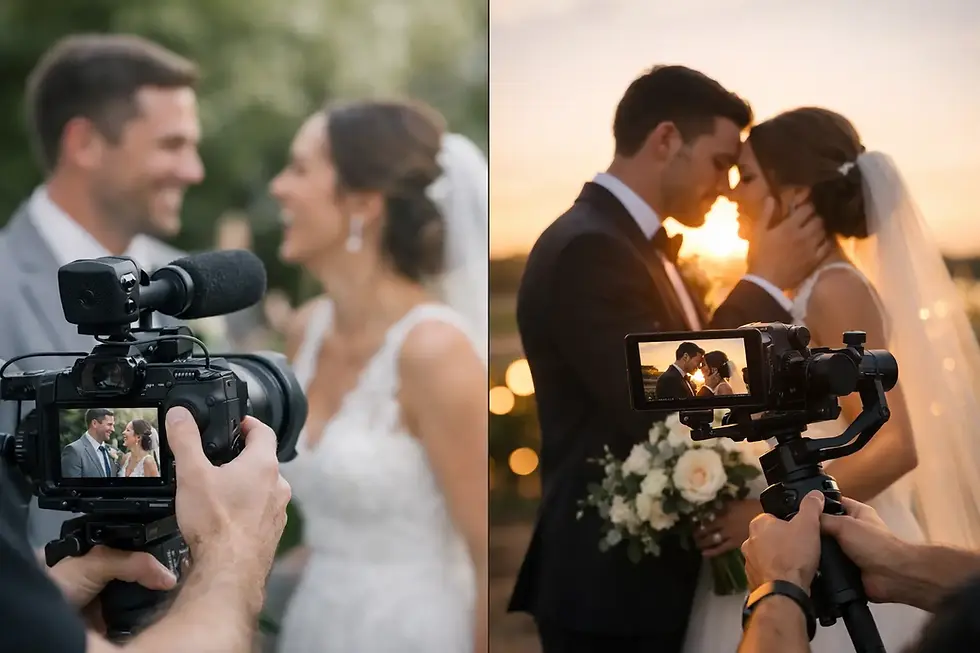
One Videographer vs Two Shooters: What Couples Need to Know
A quiet exchange during the first look. Your partner’s reaction as the ceremony doors open. A parent’s expression during the speeches that you may not even notice in real time. When couples start comparing one videographer vs two shooters, what they are really asking is how much of their wedding day a wedding videographer can realistically capture at once, and how complete they want their final wedding video to feel.
That question matters because wedding days don’t unfold in a straight line. Hair and makeup may still be finishing while details are being filmed. Cocktail hour may begin while family photos are wrapping up. During the ceremony, the person speaking, the couple’s reaction, and the guests’ emotions are all happening at the same time. The number of wedding videographers on site directly affects how much of that can be captured and how the story comes together in the final film.
Many couples planning a wedding in New Jersey choose between one videographer vs two shooters based on their timeline, venue, and coverage needs.
One videographer vs two shooters: what changes?
The biggest difference between one videographer vs two shooters is not just coverage — it’s what is actually possible to capture throughout the day. One experienced wedding videographer can absolutely create a beautiful wedding film, especially with a well-planned timeline and clear priorities. They know how to anticipate moments, move efficiently, and focus on what matters most. But at the end of the day, one person can only be in one place at a time.
With two wedding videographers, that limitation changes immediately. Instead of choosing between the couple’s reaction or the parents’ reaction, both can be captured. Instead of relying on a single angle during the ceremony, multiple perspectives can be filmed at the same time, making the final wedding video feel more immersive and cinematic. This is especially important during moments that cannot be repeated, where having more than one angle adds real depth to the story.
Another key difference is how the day is approached. With one wedding videographer, filming tends to be more selective. The focus stays on key events, and there is less flexibility to move between multiple moments happening at once. With two shooters, there is the ability to cover different parts of the day simultaneously, manage more equipment, and capture a wider range of angles, reactions, and details. This not only improves coverage, but also gives the final wedding film more variety, more energy, and a more complete representation of the day.
When one videographer is enough
There are situations where one wedding videographer can be the right fit, especially for weddings that are smaller, simpler, and more contained in one location. If you are planning a more intimate celebration with a single getting-ready space, a shorter guest list, and a straightforward timeline, one experienced videographer may be able to cover the day effectively. These types of weddings tend to move at a calmer pace, with fewer overlapping moments, which makes it easier for one person to manage.
A single wedding videographer can also work well when your priorities are focused on capturing the key parts of the day. If your main goal is to preserve the ceremony, major reception events, and the overall feeling of the wedding, one videographer can deliver a strong final film, especially when the timeline allows enough time for transitions between each part of the day.
However, it’s important to understand the trade-offs. One wedding videographer can only be in one place at a time. If both partners are getting ready in separate locations, coverage will need to be split or focused on one side of the day. During fast-moving moments, such as the ceremony or reception, there will be fewer angles, fewer reaction shots, and less flexibility to capture multiple things happening at once.
For couples who are comfortable with a more streamlined and selective version of their wedding story, one videographer can absolutely work. The key is understanding that the coverage will be more focused, with some natural limitations in how much of the day can be captured at the same time.
When two shooters make a real difference
Two shooters make the biggest difference on wedding days that are more dynamic, layered, or spread across multiple locations. When you have separate preparation locations, a traditional ceremony, or a full reception with a lot of guest interaction, having more than one wedding videographer allows the day to be captured in a much more complete and natural way.
This becomes most important during moments that cannot be repeated. The ceremony is the clearest example. With one wedding videographer, the focus is typically on a single primary angle. With two shooters, one can stay locked on the couple while the other captures reactions, processional entrances, wider views, and close-up emotional moments from family and guests. The result is not just more footage, but a more complete and emotionally layered wedding film.
Reception coverage also improves significantly with two videographers. While one focuses on key events like toasts and formal dances, the second can capture guest reactions, energy on the dance floor, and the overall atmosphere of the room. This allows the final wedding video to feel more alive and immersive, especially during high-energy parts of the night or weddings with cultural traditions and multiple events happening back-to-back.
There is also a major advantage in how the day is managed behind the scenes. Larger venues such as estates, country clubs, churches, and waterfront locations often require movement, setup, and timing coordination. With two shooters, one videographer can be in position for the next important moment while the other is finishing coverage elsewhere. This keeps everything running smoothly and helps ensure that nothing important is missed.
When a wedding has multiple moving parts, overlapping moments, or a full timeline, having two wedding videographers is not just an upgrade in coverage — it is what allows the final film to feel complete, cinematic, and true to the entire day.
Audio, angles, and peace of mind
Couples often think first about visuals, but audio is just as important. Your vows, the officiant's words, and the speeches are part of what makes a wedding film feel personal years later. Whether you have one videographer or two, professional audio planning should already be built into the day.
Where two shooters help is redundancy and responsiveness. One person can stay locked on the main event while the other adjusts position, monitors changing conditions, or captures emotional cutaways that support the spoken words in the final edit. That extra layer can be especially useful in churches, outdoor ceremonies, or receptions where the lighting and sound environment shifts throughout the evening.
It also creates a little more breathing room. Weddings move fast. Even with excellent planning, something unexpected always happens. A second shooter gives the team more options when timelines run late, rooms change quickly, or a moment unfolds somewhere you did not expect.
The editing difference in one videographer vs two shooters
From a couple's perspective, it is easy to think of this choice as a day-of staffing decision. But it also affects the final film.
With one videographer, the story often feels more intimate and streamlined. The footage may be built around decisive moments, cleaner continuity, and a focused perspective. In the hands of an experienced editor, that can be elegant and emotionally strong.
With two shooters, there is usually more visual depth to work with in post-production. Editors can cut between reactions, blend wide and close compositions, and shape scenes with more rhythm. A first look can show both of your faces at once. A speech can include the speaker, your response, and a parent's tears across the room. That added coverage helps the film feel more dimensional.
Neither approach is automatically better in every case. The better question is whether your wedding day has enough simultaneous action and emotional complexity to benefit from the second perspective.
How to decide what your wedding actually needs
The best way to decide between one videographer vs two shooters starts with your timeline, not just your budget. Where each of you is getting ready, how much travel is involved, whether your ceremony has movement restrictions, and how many events are happening during the reception all play a major role. When multiple parts of the day are happening at the same time, having more than one wedding videographer becomes much more important.
It also helps to think about how you want your wedding video to feel when you watch it back. Some couples are primarily focused on capturing the ceremony, speeches, and key moments clearly. Others want a more complete and layered film that includes reactions, atmosphere, and everything happening around them throughout the day. Both are valid — they simply lead to different levels of wedding videography coverage.
If you’re unsure, one of the best things you can do is ask your wedding videographer how they would approach your specific wedding with one shooter versus two. The answer should never be generic. It should be based on your venue, your timeline, your ceremony setup, and the moments that matter most to you.
At Blue Moon Video Productions, this is part of the planning process. After filming weddings for over 17 years, it’s usually very clear what level of coverage a wedding needs once the timeline is laid out. The goal is not to push more coverage, but to make sure nothing important is missed and that your wedding video reflects the full experience of the day.
A practical rule of thumb
If your wedding is intimate, takes place in one main location, and has a relaxed timeline with space between events, one wedding videographer may be the right fit. In these situations, the day is easier to manage with a single shooter, and the most important moments can still be captured well.
If your wedding includes separate preparation locations, a larger guest count, a formal ceremony, or a reception where multiple moments are happening at once, having two shooters will almost always provide stronger and more complete wedding videography coverage. It allows more of the day to be captured as it naturally unfolds, without having to choose between moments.
The goal is not to have more cameras in the room just for the sake of it. The goal is to preserve the feeling of your wedding day in a way that still feels complete years from now.
That’s the real decision when comparing one videographer vs two shooters. You’re deciding how much of your wedding story can be captured at once, and how fully those once-in-a-lifetime moments are preserved in your final wedding video.
The best choice is the one that matches how your wedding day will actually unfold — not a generic idea of what coverage is supposed to look like, but what your specific day truly needs.
If you're planning a wedding in New Jersey and want help deciding between one videographer vs two shooters, you can explore real wedding films and coverage options from Blue Moon Video Productions.